
PTO Calculator for Weekend Getaways
How Many PTO Days Do You Need?
Calculate your PTO requirements for weekend getaways based on Canadian standards
Enter your trip dates to see how many PTO days you need
Pro Tip: In Canada, one PTO day typically covers Friday to Monday (4 days off). Check your company's policy for specific rules.
You’ve got a long weekend coming up. The weather’s turning crisp, the leaves are falling, and you’re itching to get out of the city. But when you check your calendar, you see two options: PTO or PTA. Which one lets you actually leave town without stressing about your paycheck? If you’re confused, you’re not alone. Many people think PTO and PTA mean the same thing-until they try to book a trip and HR shuts them down.
PTO Isn’t Just ‘Time Off’-It’s a Policy
PTO stands for Paid Time Off. It’s the standard term used in most Canadian and U.S. companies. Think of it as a bank of hours you can use for any reason: sick days, personal appointments, mental health days, or yes-weekend getaways. You don’t need to explain why you’re taking it. You just request it, and if your manager approves, you’re paid as usual.
Most employers in Canada give employees between 10 and 20 days of PTO per year, depending on tenure. Toronto-based tech firms often start at 15 days. Retail and hospitality workers might get closer to 10. The key is that PTO is flexible. You can use it all at once for a five-day trip to Niagara Falls, or spread it out as two-hour breaks for dental appointments.
But here’s the catch: PTO doesn’t always mean you can leave on a Friday and come back Monday. Some companies require you to request PTO two weeks in advance. Others cap how many consecutive days you can take. And if you’re in a role that’s hard to cover-like a nurse, teacher, or small business owner-you might get pushback even if you’ve got the hours.
PTA? That’s Not a Real Thing
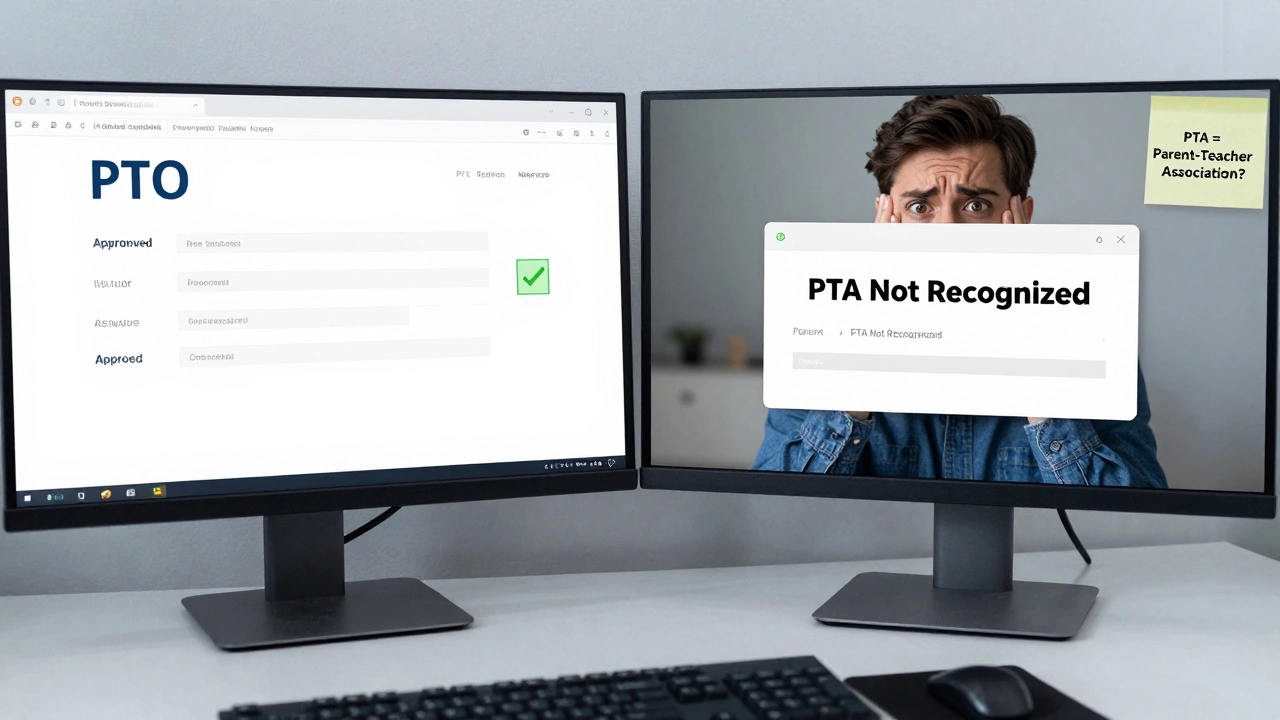
PTA doesn’t exist as a standard HR term. Not in Canada, not in the U.S., not in any official policy document you’ll find on your company’s intranet. If someone says they’re using PTA for their weekend getaway, they’re either mistaken, joking, or misremembering something else.
PTA is most commonly used as an acronym for Parent-Teacher Association. That’s a volunteer group that organizes school events and fundraisers. It has nothing to do with your paycheck or vacation time. Some people mix it up because the letters are close to PTO. Others might be thinking of Personal Time Away-a phrase some managers use informally, but it’s not an official policy.
There’s also a chance you heard PTA in another context: Public Transportation Authority or Professional Tennis Association. Neither gives you time off work. So if your coworker says, “I’m using PTA for my cottage trip,” they’re probably just confused.
Why the Confusion? Blame the Internet
Google “PTA for vacation” and you’ll get a mix of results: school boards, nonprofit orgs, and a few blog posts from people who clearly don’t know what they’re talking about. One Reddit thread from 2023 had over 12,000 comments where people argued whether PTA was a new trend in remote work. Spoiler: it wasn’t. It was a typo.
LinkedIn posts and TikTok videos sometimes spread these myths. A popular video titled “5 Hidden Ways to Get More Time Off” claimed PTA meant “Paid Time Away”-a made-up term that sounds better than PTO. But HR departments don’t recognize it. Your payroll system won’t have a PTA option. If you try to submit a PTA request, you’ll get an error message or a confused reply from your manager.
The truth? There’s no secret code. No hidden perk. No loophole. If you want to take a weekend trip, you use PTO. That’s it.
How to Actually Plan a Weekend Getaway Using PTO
Let’s say you’ve got 15 days of PTO this year. You’ve used 3 for sick days and 2 for doctor’s visits. That leaves you with 10 days. Here’s how to stretch them into real getaways:
- Use Friday and Monday to create a 4-day weekend. That’s one day of PTO, but you get four days off. Perfect for a trip to Prince Edward County or Algonquin Park.
- Book a Friday departure and return on Monday. That’s only one PTO day used, even if you’re gone for 72 hours.
- Combine PTO with statutory holidays. Canada Day (July 1) and Labour Day (September 1) are perfect anchors for long weekends.
- Plan ahead. Don’t wait until the last minute. Many companies have blackout dates during peak seasons-like Christmas week or summer holidays.
- Track your PTO in a simple spreadsheet. Include the date, reason (optional), and hours used. You’ll thank yourself when you’re trying to book a last-minute cabin.
One Toronto-based marketing manager I spoke with took 11 weekend getaways last year using just 8 PTO days. How? She always paired her Friday off with a Monday holiday. No one noticed. No one cared. She just got away.
What If You Don’t Have PTO?
If you’re hourly, part-time, or work for a small business that doesn’t offer paid leave, you’re in a harder spot. But you still have options.
Some employers let you swap shifts. If you pick up an extra shift on Thursday, you can take Friday off unpaid. Others allow you to use unpaid leave in small chunks-just make sure you’re clear about expectations. And if you’re self-employed? You’re already in control. Just block the days on your calendar and treat them like appointments.
There’s also the “work remotely” trick. If your job allows it, take a Friday off and work Saturday morning from your cabin. You’re not taking PTO-you’re just shifting your schedule. It’s not perfect, but it’s better than staying in the city.

Real Talk: Don’t Waste Your PTO
A 2024 survey by Statistics Canada found that 37% of workers didn’t use all their PTO last year. The top reasons? “Too busy,” “afraid to ask,” and “worried no one else could cover me.”
Here’s the reality: your job won’t collapse if you take a weekend off. Your boss won’t fire you. Your coworkers won’t hate you. In fact, studies show employees who use their PTO are more productive, less stressed, and more likely to stay with their company.
So if you’ve got PTO saved up and you’re thinking about that lakeside cabin or that cozy B&B in Stratford-go ahead. Use it. You earned it. And no, you don’t need to explain why. PTO means Paid Time Off. Not Paid Time for Excuses.
Final Tip: Know Your Rights
In Ontario, employers must give at least 10 days of vacation after one year of service. That’s the legal minimum. Many companies give more. If your employer says you can’t use PTO for travel, they’re wrong. You can use it for anything. Even if it’s just to sit in a park and read a book.
Don’t let confusion over PTA stop you. There’s no such thing. PTO is your tool. Use it wisely. And next time someone asks if you’re using PTA for your getaway, smile and say, “Nope. Just PTO.”
Is PTA a real type of time off?
No, PTA is not a real type of time off. It stands for Parent-Teacher Association, which is a school volunteer group. There’s no HR policy called PTA for vacation days. If someone says they’re using PTA, they’re either mistaken or joking. The only official term is PTO-Paid Time Off.
Can I use PTO for a weekend getaway?
Yes, absolutely. PTO can be used for any personal reason, including weekend trips. You don’t need to give a reason. Whether you’re heading to Niagara, the cottage, or just a nearby town for a change of scenery, PTO covers it. Just make sure to request it in advance if your company requires it.
How many PTO days do I need for a weekend trip?
If you’re taking Friday and Monday off, you only need one PTO day. That gives you a four-day weekend. If you’re leaving Thursday and returning Tuesday, that’s two PTO days. Many people stretch their PTO by combining it with statutory holidays-like using one day off before or after Canada Day to make a five-day trip.
What if my company doesn’t offer PTO?
If you’re hourly or work for a small business without paid leave, you may need to use unpaid time off or swap shifts. Some employers allow you to work remotely on weekends to make up for taking Friday off. If you’re self-employed, you control your schedule-just treat your getaway like a business appointment and block it off.
Is it better to use PTO all at once or spread it out?
It depends on your goals. Spreading PTO out helps with regular mental resets-like a one-day break every few weeks. But using it in chunks gives you longer trips, which research shows are more restorative. Most people benefit from a mix: one long getaway per season and a few short breaks in between.