Does All-Inclusive Mean No Tipping? What You Really Need to Know
All-inclusive doesn't mean no tipping. Learn who to tip, how much, and why it matters for staff at resorts. Real numbers, real impact.
When you book an tipping at all inclusive resorts, the practice of giving extra money to staff for service, even when meals and activities are already paid for. Also known as resort gratuity, it’s a common point of confusion for travelers who assume everything’s covered. But here’s the truth: just because your room, food, and drinks are included doesn’t mean the people serving you are paid well. Many staff rely on tips to make a living wage.
all inclusive resorts, vacation packages that bundle lodging, meals, drinks, and often activities into one upfront price. Also known as all-inclusive vacation packages, they’re popular in the Caribbean, Mexico, and parts of Southeast Asia. But the staff working the bars, cleaning your room, or carrying your bags aren’t always paid enough by the resort to live comfortably. That’s where tipping etiquette, the unwritten rules about when, how much, and to whom you should give tips comes in. In places like Jamaica or the Dominican Republic, not tipping at all can feel like ignoring hard work. In others, like some European all-inclusives, it’s optional and rarely expected.
Here’s what most travelers don’t realize: tipping isn’t about being generous—it’s about fairness. A bartender who pours 50 drinks a day deserves more than a polite smile. A housekeeper who changes 15 beds daily shouldn’t have to rely on tourists’ guilt to pay rent. The best approach? Keep it simple. Bring small bills. Give $1–$2 to the housekeeping staff every day. Tip $1–$5 to waiters after meals if service was good. Hand cash directly to the person, not the front desk. Skip the envelope. Don’t overthink it. People notice when you pay attention.
Some resorts now add a service charge to your bill—check your receipt. If it’s labeled as mandatory, you’re covered. If it’s optional, or if you’re unsure, ask. And if you’re in a country where tipping is rare, like Thailand or Japan, don’t feel pressured. But in the Caribbean and Mexico? Not tipping can be seen as rude, even if the resort tells you it’s not required. The locals know the system. They see who tips and who doesn’t.
There’s also a difference between tipping for service and tipping for extras. Need someone to carry your bags? Tip them. Want a drink delivered to your sunbed? Tip the waiter. But if you’re just eating at the buffet or sipping a cocktail at the bar, tipping isn’t always expected—unless the service went above and beyond. Think of it like a coffee shop: you don’t tip for the coffee, but you might tip the barista who remembers your name and makes you a perfect latte.
And don’t forget: tipping isn’t just about cash. A handwritten note, a smile, or saying "thank you" in Spanish or French can mean more than money. But cash still matters. It’s real. It’s immediate. And it’s often the only way staff can afford to feed their kids or fix their car.
Below, you’ll find real advice from travelers who’ve been there—what worked, what backfired, and what locals actually appreciate. No fluff. No corporate advice. Just what happens when you show up, pay attention, and treat people like humans—not just service staff.
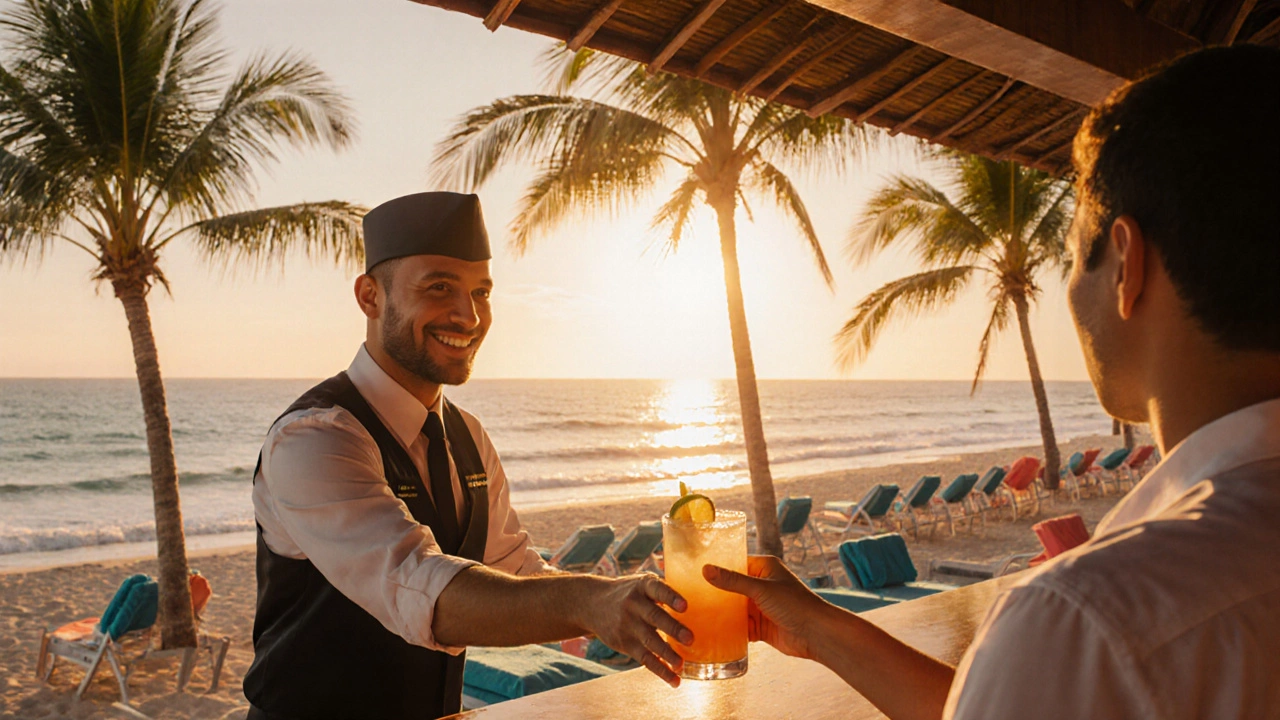
All-inclusive doesn't mean no tipping. Learn who to tip, how much, and why it matters for staff at resorts. Real numbers, real impact.