
Luxury Travel Personality Quiz
Not sure if you should book an all-inclusive resort or a private villa? Answer these 5 questions to find out which travel model suits your personality best.
Your Travel Profile:
Best For You:
Watch Out For:
Picture this: You’re standing in the lobby of a five-star all-inclusive resort in Cancun. There’s a line at the check-in desk. A family is arguing about room upgrades. Someone spills a drink on the marble floor. Now, imagine a billionaire arriving at the same property. Do they stand in that line? Do they care about the buffet hours? Probably not. But does that mean they never visit these places? Not exactly.
The question do rich people go to all-inclusive resorts isn’t a simple yes or no. It’s a mix of convenience, privacy, and how you define "rich." For some ultra-wealthy travelers, the idea of sharing a pool with hundreds of strangers sounds like a nightmare. For others, especially those who value time over exclusivity, an all-inclusive can be a surprisingly smart move. Let’s break down who actually books these stays, why they do it, and where the real luxury lies when money is no object.
Who Actually Books High-End All-Inclusives?
When we talk about "rich," we’re usually talking about two different groups: the aspirational wealthy and the ultra-high-net-worth individuals (UHNWIs). The first group-people earning $150k to $300k a year-are the primary drivers of the premium all-inclusive market. They want the experience without the hassle of planning every meal and activity. They book brands like Sandals, Hyatt Ziva, or Secrets Maroma Beach because they offer a curated experience that feels luxurious but comes with a predictable price tag.
But what about the Jeff Bezos types? The folks with billions? They rarely book standard all-inclusive packages for themselves. Why? Because their biggest luxury isn’t free drinks; it’s control. They don’t want to wait for a table at the beach club. They don’t want to share a cabana. However, they often send their extended families, nannies, or younger relatives to these resorts. Or, they use them as a base while staying in a private villa nearby.
The Convenience Factor: Why Wealthy Travelers Choose Ease
Time is the one resource even billionaires can’t buy more of. For a busy executive or a celebrity on tour, the mental load of planning a vacation is heavy. If you have to decide where to eat for seven days, book transfers, and tip staff constantly, that’s stress. An all-inclusive removes that friction.
I’ve spoken with several high-income professionals in Toronto who swear by this. One tech founder told me he books top-tier all-inclusives in Mexico not because he loves the buffet, but because he doesn’t want to think. He wants to walk out of his suite, grab a fresh espresso, and sit by the ocean without checking his bank account or negotiating prices. For him, the "all-in" part isn’t about saving money-it’s about saving brainpower.
This demographic often books the most expensive suites available. They might pay $2,000+ per night for a swim-up villa at a place like Breathless Montego Bay or Excellence Playa Mujeres. They aren’t there for the discount; they’re there for the service infrastructure that allows them to disconnect completely.
Privacy vs. Exclusivity: The Real Deal-Breaker
Here’s the catch: true wealth craves privacy. Standard all-inclusive resorts are designed for volume. That means crowded pools, long lines at restaurants, and noise. For a UHNWI, this lack of exclusivity is often unacceptable. They prefer private islands, boutique hotels with fewer than 20 rooms, or fully staffed private villas.
However, the industry has adapted. Many high-end chains now offer "club level" or "elite" sections within their resorts. These areas have separate pools, private concierges, and restricted access. While you still share the general property, your immediate environment is controlled. Some wealthy guests also rent entire wings of smaller, adults-only properties, effectively turning a mid-sized resort into a semi-private retreat.
| Feature | Premium All-Inclusive | Luxury Boutique Hotel | Private Villa Rental |
|---|---|---|---|
| Privacy Level | Moderate (Club Levels) | High | Total |
| Planning Effort | Low | Medium | High (unless managed) |
| Cost Predictability | High | Low | Variable |
| Social Environment | Bustling / Family or Adult Mix | Quiet / Exclusive | Private Group Only |
The "Villa Within a Resort" Strategy
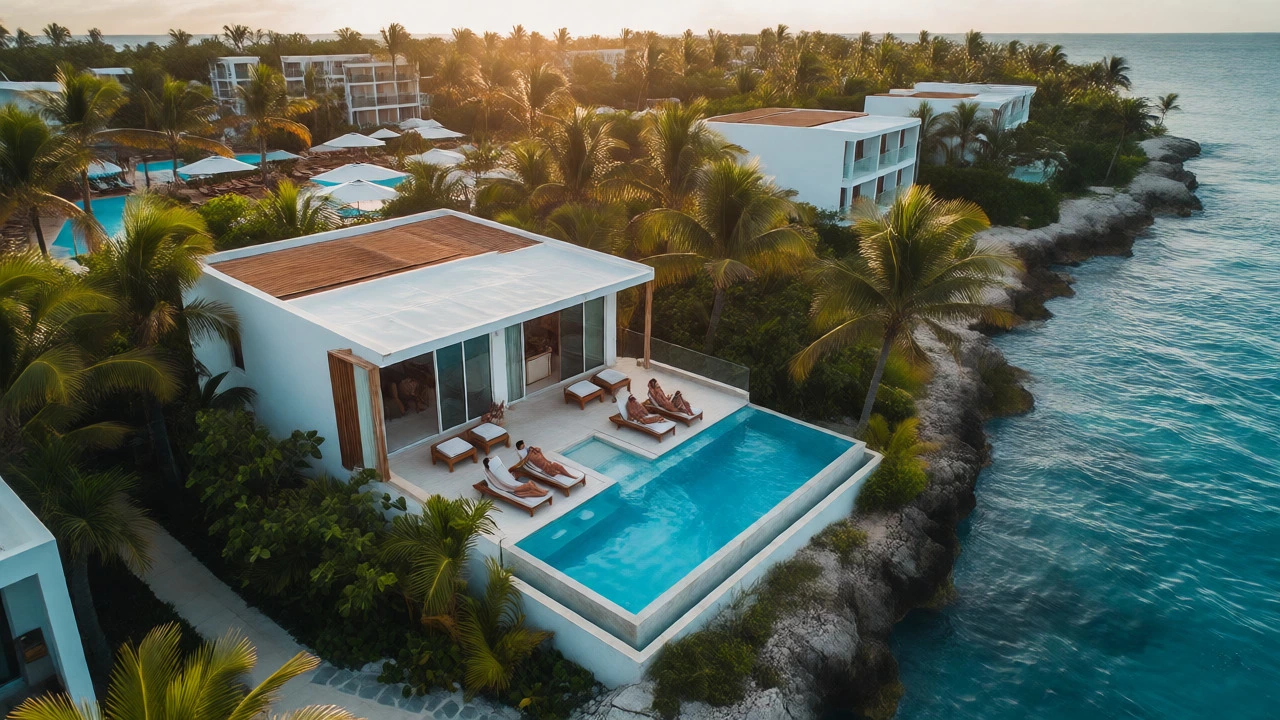
A growing trend among the affluent is booking a private villa located on the grounds of a large resort. Think of it as having your own house with a pool, but you get to use the resort’s spa, golf course, and fine-dining restaurants. This hybrid model offers the best of both worlds. You get the autonomy of a private home and the amenities of a major brand.
Places like Rosewood Mayakoba or certain sections of the Aman resorts operate on this principle. While technically not "all-inclusive" in the traditional sense, many offer tailored dining plans that mimic the convenience. For a wealthy family traveling together, this setup eliminates the chaos of coordinating ten people at a public restaurant. You just order in, and a chef prepares dinner in your kitchen. No waiting, no crowds, just quality time.
Where Do the Ultra-Rich Actually Go Instead?
If they aren’t at the typical all-inclusive, where are they? The answer varies by season and interest, but three categories dominate:
- Private Islands: Brands like Necker Island (Richard Branson) or Mustique offer total isolation. You fly in on a small charter plane, and the only other people around are staff and your invited guests.
- Yacht Charters: For many, the ultimate all-inclusive experience is a superyacht. Everything is paid for upfront, including fuel, crew, and provisions. It moves from port to port, offering novelty without the hassle of repacking.
- Ultra-Luxury Hotels: Properties like Four Seasons, Ritz-Carlton Reserve, or Aman provide personalized service without the "mass market" feel. The staff-to-guest ratio is incredibly high, ensuring needs are met before they’re even voiced.
Notice a pattern? Control and customization. The wealthy don’t mind paying extra if it means the experience is tailored specifically to them. A standard all-inclusive menu, no matter how gourmet, is still a set menu. A private chef on a yacht creates a menu based on what you ate for breakfast yesterday.

How to Spot a "Rich Person" at an All-Inclusive
You might think you can spot the wealthy by their clothes, but in tropical destinations, everyone wears linen shorts and flip-flops. So, how do you tell? Look at behavior and logistics.
- They don’t rush for sunbeds. Average tourists wake up early to claim loungers. Wealthy guests either have reserved cabanas or simply don’t care if they sit in the shade.
- They use the concierge heavily. They won’t navigate the resort alone. They’ll ask the concierge to arrange a specific wine pairing or book a sunset cruise that wasn’t on the main schedule.
- They arrive via private transfer. You won’t see them on the yellow shuttle bus. Their car is blacked-out SUV or a sedan driven by a professional driver, often arranged through the hotel’s VIP desk.
- They tip disproportionately. While tipping culture varies, wealthy travelers often leave substantial tips for exceptional service, creating a feedback loop of better treatment throughout their stay.
Is It Worth It for You?
So, should you follow the lead of the wealthy and book an all-inclusive? It depends on your personality type. If you hate decision fatigue and love knowing exactly what your vacation will cost before you leave home, then yes. The premium all-inclusive model is fantastic for relaxation.
But if you crave cultural immersion, local street food, and spontaneous adventures, an all-inclusive might feel like a gilded cage. The wealthy avoid these places not because they’re cheap, but because they’re static. They want experiences that change daily. If you’re looking for that, consider a hybrid approach: stay at a boutique hotel during the day and explore locally, rather than locking yourself into a resort bubble.
Ultimately, the definition of luxury has shifted. It’s no longer just about gold-plated faucets. It’s about seamless experiences. Whether that happens in a mega-resort or a private island depends entirely on what kind of peace you’re trying to buy.
Do celebrities stay at all-inclusive resorts?
Yes, but usually in high-security, adults-only, or boutique-style all-inclusives. Celebrities often choose properties like Eden Roc Miami Beach or specific wings of larger resorts where they can maintain privacy. They may also book entire floors or adjacent villas to ensure discretion.
Why would a millionaire choose an all-inclusive over a private villa?
Convenience and social interaction. Private villas require managing staff, meals, and maintenance. An all-inclusive handles everything automatically. Additionally, some millionaires enjoy the lively atmosphere and meeting new people, which is harder to do in isolated private rentals.
What is the most expensive all-inclusive resort chain?
Chains like Sandals Royal Caribbean (with its private island), Hyatt Zilara/Ziva, and Excellence Collection are among the pricier mainstream options. However, truly ultra-luxury experiences often come from independent brands like Aman or Six Senses, which offer "soft all-inclusive" models where most amenities are covered but the service is highly personalized.
Do rich people tip at all-inclusive resorts?
Absolutely. Even though services are "included," wealthy travelers often tip generously to secure priority seating, faster service, or special requests. Tipping is seen as a way to customize the experience and show appreciation for exceptional staff effort.
Are all-inclusive resorts suitable for families with children?
Yes, many high-end all-inclusives cater specifically to families with kids' clubs, water parks, and connecting suites. Brands like Club Med and Sandals are popular with affluent families because they allow parents to relax while children are supervised in safe, engaging environments.