
When planning a beach getaway, the timing can make or break the experience. Florida is a sunshine‑rich state that draws millions of tourists each year, but not every month feels the same. Below you’ll find a deep‑dive into the climate, crowds, and cost factors that determine the best month to visit Florida for a perfect beach holiday.
Key Takeaways
- Late March to early May offers warm water, low rain, and manageable crowds.
- June - August brings heat and humidity plus the peak of hurricane season.
- September and October are cheaper but face higher rain and storm risk.
- December - February is pleasant for those who prefer milder temperatures, though hotel rates rise during holidays.
- Choosing a specific region (e.g., Miami vs. Key West) can shift the ideal month by a few weeks.
Understanding Florida’s Climate
Florida’s weather is heavily influenced by its peninsula shape, surrounding Gulf of Mexico, and Atlantic Ocean. The state experiences a tropical climate in the south and a subtropical climate in the north. Two main seasons dominate:
- Warm season - Roughly May through October, marked by high temperatures (80‑95°F / 27‑35°C) and high humidity.
- Cool season - November through April, with milder temps (60‑75°F / 16‑24°C) and lower humidity.
The Atlantic hurricane season officially runs from June 1 to November 30, peaking in August and September. While hurricanes are rare, tropical storms and heavy showers become common during this window.
Month‑by‑Month Snapshot
| Month | Avg High (°F) | Avg Low (°F) | Rainfall (in) | Humidity | Crowd Level | Avg Hotel Price (USD) |
|---|---|---|---|---|---|---|
| January | 68 | 50 | 2.5 | 68% | Medium | 150 |
| February | 71 | 53 | 2.3 | 66% | Medium | 155 |
| March | 78 | 60 | 2.7 | 70% | High | 170 |
| April | 84 | 66 | 2.9 | 73% | High | 180 |
| May | 88 | 72 | 3.4 | 77% | High | 190 |
| June | 90 | 75 | 4.2 | 80% | Very High | 200 |
| July | 92 | 77 | 4.5 | 82% | Very High | 205 |
| August | 92 | 77 | 4.7 | 83% | Very High | 210 |
| September | 88 | 74 | 5.8 | 84% | Medium | 180 |
| October | 82 | 68 | 5.0 | 80% | Medium | 170 |
| November | 75 | 60 | 3.2 | 73% | Low | 155 |
| December | 70 | 55 | 2.8 | 70% | Low | 150 |
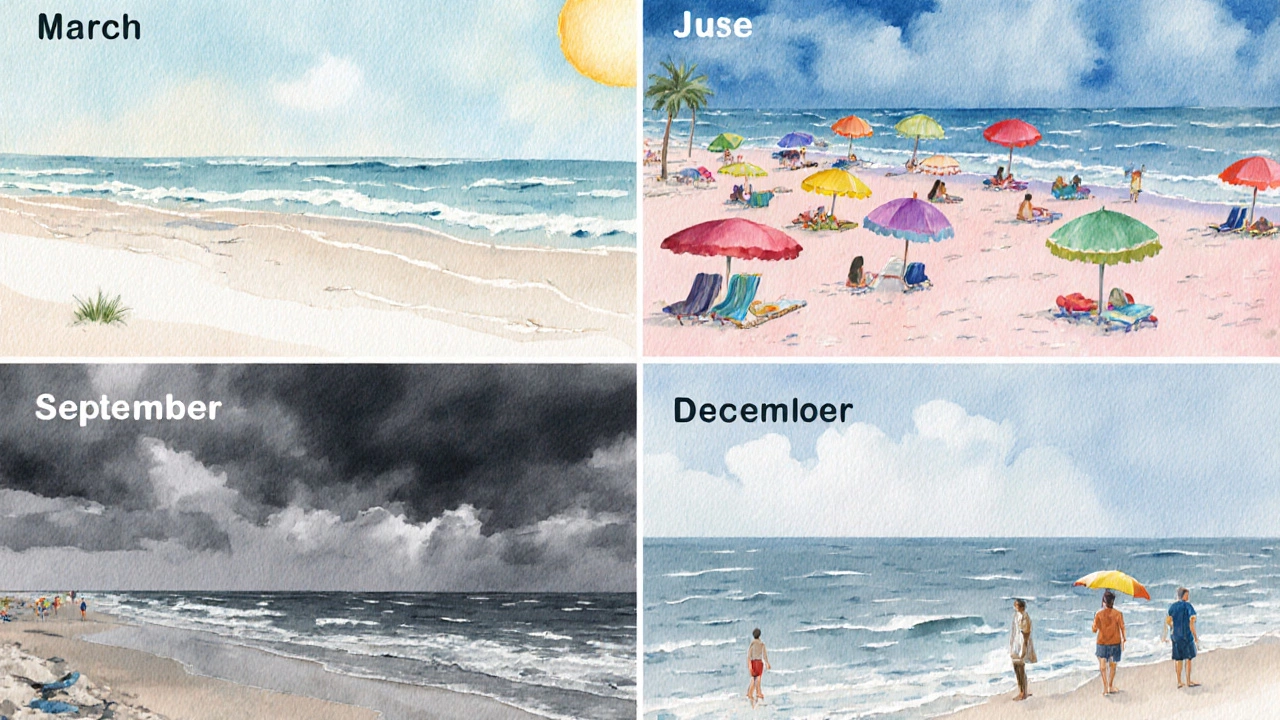
Regional Nuances: Where You Go Matters
Florida’s coastline stretches over 1,300 miles, and conditions vary by region. Below are three popular spots and how the best month shifts for each.
Miami (Atlantic Coast)
Miami enjoys warm water year‑round, but the city’s party vibe peaks between March and May. During this window, ocean temps sit around 77°F (25°C) and humidity is tolerable. Late summer brings crowds and high humidity, making beach time feel sticky.
Key West (Southernmost tip)
Key West’s tropical climate means even winter feels beach‑ready. The best month here is April‑May, when rain drops to under 3 inches and sea breezes keep temperatures comfortable.
Tampa (Gulf Coast)
Tampa Bay benefits from slightly lower humidity than the Atlantic side. Late February through early April offers sunny skies, mild water, and fewer tourists compared to the spring break rush.
Balancing Weather and Cost
Travel budgets often dictate timing. High‑demand months (March‑May, December holidays) push hotel prices up 15‑30%. If you’re price‑sensitive, consider the shoulder months of late October or early November. You’ll still get warm water (around 78°F) with a 40‑50% discount on accommodations, though expect occasional afternoon showers.
Activities Beyond Sunbathing
Florida isn’t just sand. Your chosen month influences non‑beach activities:
- Wildlife watching - The Everglades National Park (Everglades National Park) is best visited in November‑December when mosquitoes dwindle.
- Theme parks - Orlando’s Disney World sees shorter lines in September, but you must be prepared for afternoon rain.
- Water sports - Kayaking in the Gulf is safest in February‑April when water is calm and storms are rare.
Safety Tip: Hurricane Awareness
The U.S. National Weather Service advises monitoring tropical cyclone updates from June through November. If you travel during this period, book refundable accommodations and consider travel insurance that covers storm cancellations.
Quick Planning Checklist
- Pick a region (Miami, Key West, Tampa, etc.).
- Choose a month based on weather, crowd level, and budget.
- Check historic hurricane data for that month.
- Book hotels with free‑cancellation policies during high‑risk months.
- Pack sun protection year‑round; even winter sun can cause burns.
Frequently Asked Questions
When is the weather most reliable for beach trips?
Late March through early May offers the most consistent warm temperatures, low rainfall, and moderate humidity across most of Florida.
Are there any months where the ocean is too cold for swimming?
Even in January, south Florida’s water stays near 70°F (21°C), which many find comfortable. Northern Gulf spots can feel brisk, but a wetsuit solves that.
How can I avoid the crowds during peak season?
Target weekdays instead of weekends, book early‑morning beach time, and consider less‑touristy beaches like Pensacola or the Forgotten Coast.
Is travel insurance worth it for hurricane season?
Yes. Look for policies that cover trip cancellation, hotel re‑booking, and lost luggage due to storm disruptions.
What non‑beach activities are best in the off‑season?
Visit the Everglades for wildlife tours, explore Orlando’s theme parks with shorter lines, or enjoy low‑key fishing charters along the Gulf.
By matching your preferred weather, budget, and activity list with the month that ticks the most boxes, you’ll land on the nicest month in Florida for your beach holiday. Happy travels!