
Adventure Travel Age & Eligibility Checker
Not sure if your group is ready for that adrenaline rush? Enter the participant's details below to see typical eligibility standards for popular adventure activities.
You’ve booked the trip of a lifetime. The itinerary is packed with white-water rafting, zip-lining through rainforests, and maybe even a night under the stars in the Andes. But then you hit the fine print: "Minimum age 18." Or worse, you’re planning a family ski trip, and the instructor says your 6-year-old is "too small" for the black diamond run. It’s frustrating, right? Age limits in adventure travel are often arbitrary, confusing, or just plain unclear.
Here’s the truth: there is no single global rulebook for who can go on an adventure holiday. The "age range" depends entirely on the activity, the operator, the location, and sometimes even your health insurance policy. If you’re wondering whether you’re too young, too old, or just right for that bungee jump or safari trek, you need to understand how these rules actually work. This guide breaks down the real-world age requirements so you don’t get turned away at the starting line.
The Myth of One Size Fits All
Most people assume there’s a standard age bracket for all thrill-seeking vacations. There isn’t. A 10-year-old might be perfectly safe on a gentle river float but completely barred from a high-altitude mountaineering course. Why? Because risk assessment varies wildly between activities.
Activity Type is the primary driver of age restrictions. Operators categorize adventures into tiers based on physical demand, technical skill, and potential danger. For instance, low-risk activities like kayaking or hiking usually have flexible lower limits (often 5-7 years), while high-risk pursuits like skydiving or rock climbing typically enforce stricter minimums (16-18 years).
Don’t let marketing blurbs fool you. Just because a brochure shows a child smiling on a quad bike doesn’t mean every operator allows it. Some companies set higher bars to reduce liability insurance costs. Always check the specific operator’s terms, not just the destination’s general guidelines.
Minimum Age Requirements by Activity Category
To give you a concrete idea, here’s how common adventure activities stack up regarding minimum ages. These figures reflect typical standards in major adventure hubs like Costa Rica, New Zealand, and Canada, but local laws can shift these numbers slightly.
| Activity | Typical Minimum Age | Notes & Exceptions |
|---|---|---|
| Hiking / Trekking | 5-7 years | Depends on trail difficulty; children must keep pace. |
| Kayaking / Canoeing | 6-8 years | Must wear life jacket; calm waters only for younger kids. |
| White-Water Rafting | 8-12 years | Class III rapids usually require age 12+; Class I-II may allow 8+. |
| Zipline / Canopy Tour | 6-8 years | Often requires weight minimum (e.g., 40 lbs) as well. |
| Rock Climbing | 10-12 years | Indoor gyms may allow younger; outdoor multi-pitch needs more maturity. |
| Bungee Jumping | 16-18 years | Strictly enforced due to liability; some places allow 14 with parental consent. |
| Skydiving (Tandem) | 18 years | Hard legal limit in most countries due to insurance contracts. |
| Scuba Diving | 10-12 years | PADI Junior Open Water starts at 10; depth limited until 15. |
Notice the pattern? The more complex the equipment or the higher the consequence of error, the older the participant needs to be. It’s not just about size-it’s about cognitive ability to follow safety commands under stress.
Is There an Upper Age Limit?
This is where things get interesting. Unlike minimum ages, which are rigid, maximum age limits are rarely hard stops. You won’t find many operators saying, "Sorry, you’re 75, you can’t hike this mountain." Instead, they use health declarations.
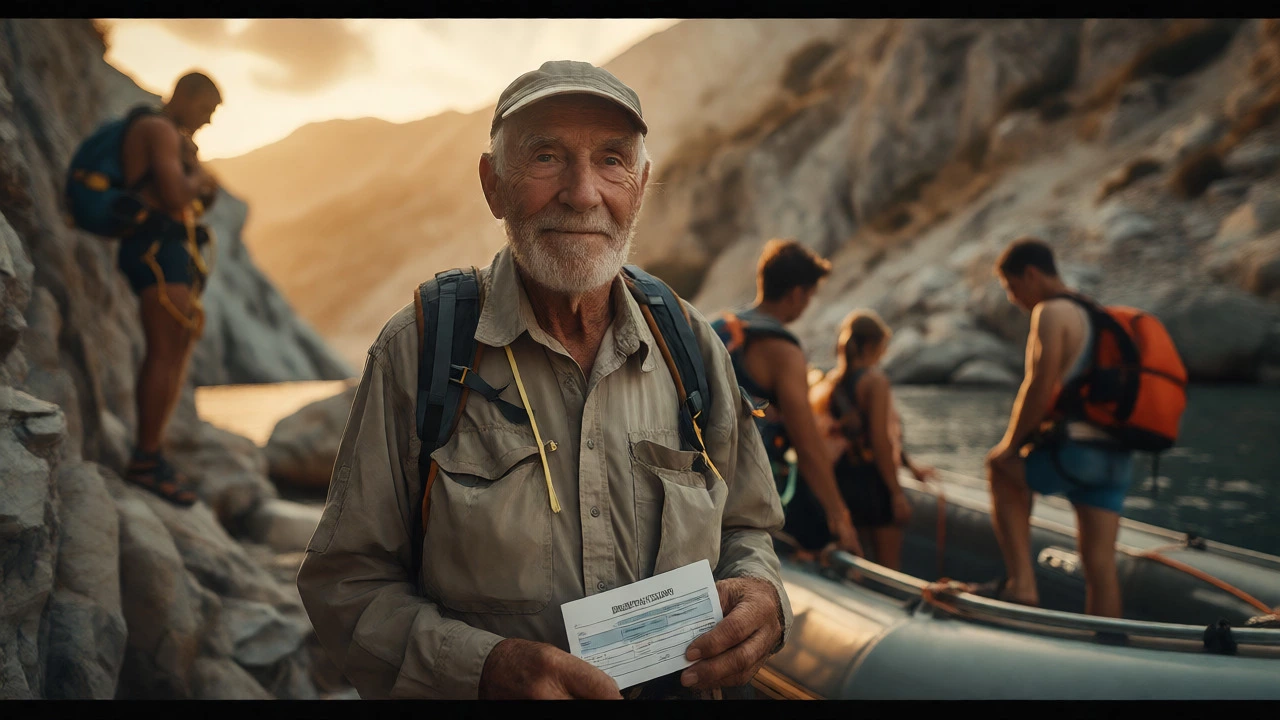
Health Fitness becomes the gatekeeper for seniors. Most adventure operators require participants over 60 or 65 to sign a medical waiver confirming they have no heart conditions, severe arthritis, or balance issues. If you’re active and healthy, you can likely participate in activities well into your 70s and beyond. I’ve met 80-year-olds doing camel treks in Morocco and 70-year-olds snorkeling in the Great Barrier Reef.
However, some extreme expeditions do impose soft caps. For example, certain Everest Base Camp treks recommend against beginners over 65 due to altitude sickness risks. Similarly, intense multi-day cycling tours might discourage participants over 70 unless they’re seasoned cyclists. Always ask: "Do you have experience with guests my age doing this?" Their answer will tell you if they’re experienced or just risk-averse.

Family Adventures: Bridging the Gap
Traveling with mixed-age groups is tricky. If you have a 4-year-old and a 16-year-old, finding one activity that works for both is nearly impossible. Here’s how to handle it:
- Look for Split Groups: Many tour operators offer parallel activities. While the teens go zip-lining, the parents take the toddler on a nature walk. Everyone meets up for lunch.
- Choose Multi-Level Destinations: Places like Banff National Park or Queenstown, New Zealand, offer everything from easy lakeside strolls to hardcore paragliding. You can pick your own intensity level.
- Private Guides: If budget allows, hiring a private guide lets you customize the pace. They can carry the little one or slow down for grandma without holding back the adrenaline junkies.
Remember, forcing a child into an activity they’re not ready for can ruin the vibe. If your 8-year-old is terrified of heights, skipping the zipline isn’t a failure-it’s smart parenting.
Legal and Insurance Constraints
Sometimes the age limit has nothing to do with physics and everything to do with paperwork. In many jurisdictions, minors cannot legally sign liability waivers. That means if you’re 17 and want to go jet skiing, you might need a parent present to sign the form, or you might be barred entirely if the operator doesn’t accept unaccompanied minors.
Insurance is another big factor. Travel insurance policies often exclude high-risk activities for anyone under 18 or over 70 unless specifically covered. Before booking, call your insurer. Ask: "Does my policy cover scuba diving for my 16-year-old?" If they say no, you might need a specialized sports travel insurance plan. Don’t skip this step-medical evacuation from a remote jungle can cost $100,000+ out of pocket.
How to Verify Age Eligibility Before Booking
Don’t rely on third-party booking sites. They often list generic info. Go straight to the source.
- Check the FAQ Page: Look for "Participant Requirements" or "Eligibility."
- Email the Operator Directly: Be specific. Say, "I have a 9-year-old weighing 60 lbs. Is she eligible for the canopy tour?" Get their reply in writing.
- Ask About Weight Limits: Often, age and weight go hand-in-hand. Harnesses have min/max weights. If your kid is small for their age, they might fail the weight check even if they meet the age check.
- Review Cancellation Policies: If you’re unsure about a health restriction, book a refundable option. Better to cancel than to be stuck paying for an unused ticket.
Real-Life Scenarios: When Rules Bend
Rules aren’t always black and white. I once spoke with a couple in Toronto whose 15-year-old son wanted to go skydiving. He was tall, athletic, and mature. The operator in Ontario said no-strict 18+ rule. But when they traveled to Florida, a different operator allowed him at 16 with notarized parental consent. Same activity, different country, different outcome.
Another example: A grandmother wanted to join her grandkids on a horseback riding tour. She was 72, had mild knee pain, but rode horses as a child. The operator initially hesitated but eventually agreed after she provided a doctor’s note clearing her for light exercise. Communication saved the trip.
The key takeaway? Maturity and fitness matter more than birth year. If you’re pushing the boundary, prove you’re capable. Show photos of past hikes, mention your gym routine, or bring a doctor’s clearance. Operators want happy customers, not lawsuits. If you demonstrate responsibility, they’ll often work with you.
Final Thoughts on Planning Your Adventure
Age shouldn’t stop you from exploring. Whether you’re 5 or 75, there’s an adventure out there for you. The trick is matching the activity to your actual capabilities, not just your chronological number. Do your homework, ask questions, and never guess. The best memories come from trips where everyone feels safe, included, and excited-not excluded by a fine print clause.
Can a 12-year-old go on a safari?
Yes, most safari operators welcome children aged 6 and up. However, some luxury lodges or walking safaris have a minimum age of 12 or 16 due to safety concerns around large wildlife. Always check with the specific lodge before booking.
Is there a maximum age for scuba diving?
No, there is no upper age limit for scuba diving. Participants over 65 typically need a medical questionnaire signed by a physician to confirm they are fit to dive. Many divers continue well into their 80s.
Why do some activities require a minimum weight instead of age?
Safety equipment like harnesses and life jackets are designed to fit within specific weight ranges. If a child is too light, the gear may not secure properly, posing a risk. Conversely, if they are too heavy, the equipment might exceed its load capacity. Weight ensures a proper fit regardless of age.
Can I bring a teenager alone on an adventure trip?
It depends on the operator and the activity. Many youth adventure camps accept teens aged 12-17 without parents. However, for individual activities like bungee jumping or renting vehicles, most companies require participants to be 18 or accompanied by an adult. Check the specific company's policy on unaccompanied minors.
What if I have a pre-existing condition?
Disclose it upfront. Most adventure operators require a health declaration form. Conditions like asthma, heart problems, or recent surgeries may restrict participation in high-altitude or high-intensity activities. A doctor's clearance letter is often requested for those over 60 or with known conditions.