
Resort Cost Comparison Calculator
Compare Your Vacation Costs
Cost Breakdown
Which is cheaper?
What This Shows
US resorts often seem cheaper upfront but add up to more cost through daily extras. All-inclusive packages provide predictability but may not fit all travel styles. Based on the article content, US resorts typically rely on à la carte pricing to maximize revenue from individual services.
Remember: In the US, hotels make money through upselling (food, drinks, activities) while all-inclusive resorts in other countries have different labor structures and cultural expectations.
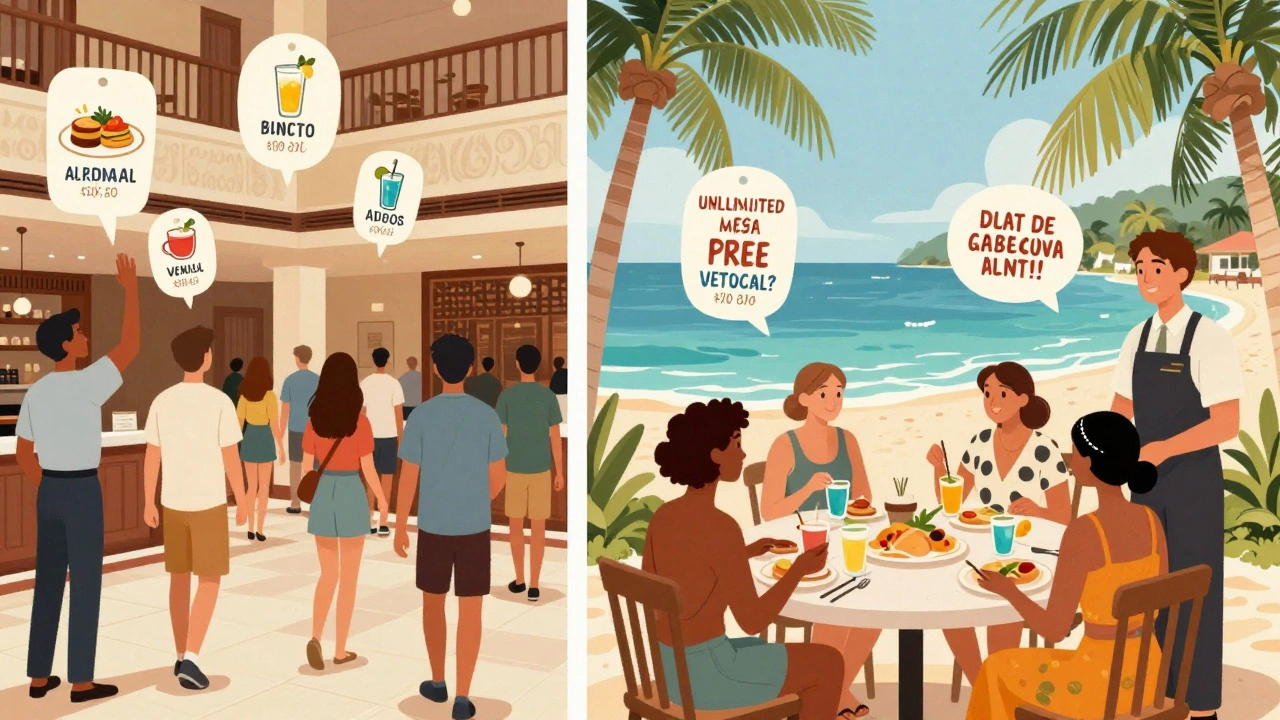
Ever wonder why you can’t find a true all-inclusive resort in the United States like you can in Mexico, Jamaica, or the Dominican Republic? You can book a beachfront hotel in Florida, pay $400 a night, and still get charged extra for your breakfast, your cocktail, your Wi-Fi, and even the towel at the pool. Meanwhile, just across the border, a resort in Cancún includes meals, drinks, activities, and even gratuities in one upfront price. So why doesn’t the U.S. do the same?
The Business Model Doesn’t Fit
All-inclusive resorts work because they lock you into a single price that covers everything. That means the resort can predict revenue, manage inventory, and reduce waste. In the U.S., hotels rely on a different system: à la carte pricing. They make more money by charging you for every little thing. A $20 cocktail? A $12 breakfast sandwich? A $15 fee to use the hot tub? Those add up-fast. And hotels know it.
Take the average U.S. beach resort. It might charge $300 per night for a room, but then make another $80-$120 per guest per day from food, drinks, spa services, and activities. That’s not just profit-it’s the entire business model. If they bundled everything into one price, they’d lose the flexibility to upsell. And in a market where margins are tight, that’s risky.
Cultural Differences in Vacation Expectations
U.S. travelers don’t just want convenience-they want control. Many Americans prefer to choose exactly what they eat, when they eat it, and how much they spend. A family might want to skip dinner one night and grab pizza downtown. A couple might want to splurge on a premium cocktail but skip the fancy spa. All-inclusive resorts force you into a fixed menu, fixed hours, and fixed options.
Compare that to places like Mexico, where tourism is a massive industry and locals have built entire economies around it. Resorts there are designed for foreign visitors who expect everything handed to them. In the U.S., people still value independence. They want to explore local restaurants, try regional specialties, and feel like they’re not trapped inside a resort bubble.
Regulations and Labor Costs
There’s also a legal side to this. In the U.S., labor laws are strict. Workers must be paid minimum wage, overtime, and tips are legally protected. In all-inclusive resorts abroad, staff are often paid lower wages, and tips are included in the package-so resorts can control labor costs.
In the U.S., if a resort included unlimited drinks and meals in one price, they’d still have to pay servers, bartenders, and kitchen staff hourly wages plus tips. That’s not just expensive-it’s legally complicated. In places like Jamaica or the Bahamas, resorts can structure pay differently. They can offer lower base wages because tips are bundled, and workers rely on the package system for income.
Trying to replicate that model here would either mean cutting wages (illegal) or raising the base price so high that no one would buy it.
The Competition Isn’t Just Other Resorts
The U.S. doesn’t just compete with Caribbean resorts-it competes with Airbnb, boutique hotels, city breaks, and road trips. Americans have more vacation options than ever. Why pay $1,500 for an all-inclusive package when you can book a $700 Airbnb, fly into a city, and spend your days exploring local markets, food trucks, and live music?
Even within the resort space, U.S. hotels focus on luxury, exclusivity, and customization. Think Four Seasons, Aman Resorts, or even boutique properties in Napa or Santa Fe. These places don’t need to be all-inclusive because they’re selling an experience, not a bundle. Guests pay for ambiance, privacy, and service-not for unlimited tacos and margaritas.
There Are Exceptions-But They’re Rare
It’s not that all-inclusive doesn’t exist in the U.S. There are a few outliers. The Travaasa Austin in Texas offers a “planned experience” package that includes meals, yoga, and outdoor activities. The Amangiri in Utah includes breakfast and some activities in its rate. But these are exceptions, not the norm. They’re high-end, niche, and priced for a very specific audience.
Even then, they’re not true all-inclusives. You still pay extra for spa treatments, alcohol, and special excursions. The U.S. version of “all-inclusive” is more like “mostly-inclusive with a few extras you’ll still be charged for.”

What Happens When You Try?
Some U.S. resorts have tried. In 2022, a luxury property in Florida launched an “all-inclusive” package. It included meals, non-alcoholic drinks, and daily activities. Within six months, they dropped it. Why? Guests complained they couldn’t get enough alcohol. Others said the food was repetitive. And the resort’s revenue dropped 22% because they lost the ability to upsell.
One guest said: “I paid $1,200 for the package, but I still ended up spending $300 on cocktails and $150 on a massage. I might as well have booked the room separately.”
That’s the problem. Americans don’t feel like they’re getting value from an all-inclusive unless they’re *overusing* it. But if they overuse it, the resort loses money.
It’s Not About Preference-It’s About Economics
The U.S. doesn’t have all-inclusive resorts because the system doesn’t work here. It’s not that Americans hate them. It’s that the model clashes with labor laws, consumer behavior, and profit expectations.
In countries where tourism is the backbone of the economy, all-inclusive resorts thrive. They’re efficient, predictable, and scalable. In the U.S., the travel industry is built on choice, flexibility, and fragmentation. Hotels make money by letting you pay for what you want, when you want it.
So next time you’re scrolling through resort websites and wondering why the U.S. options feel so… broken, remember: it’s not a flaw. It’s the system.