Guided Tour Value Calculator
Find out how much value a guided tour would add to your next trip based on your travel style and preferences.
Your Guided Tour Value Score
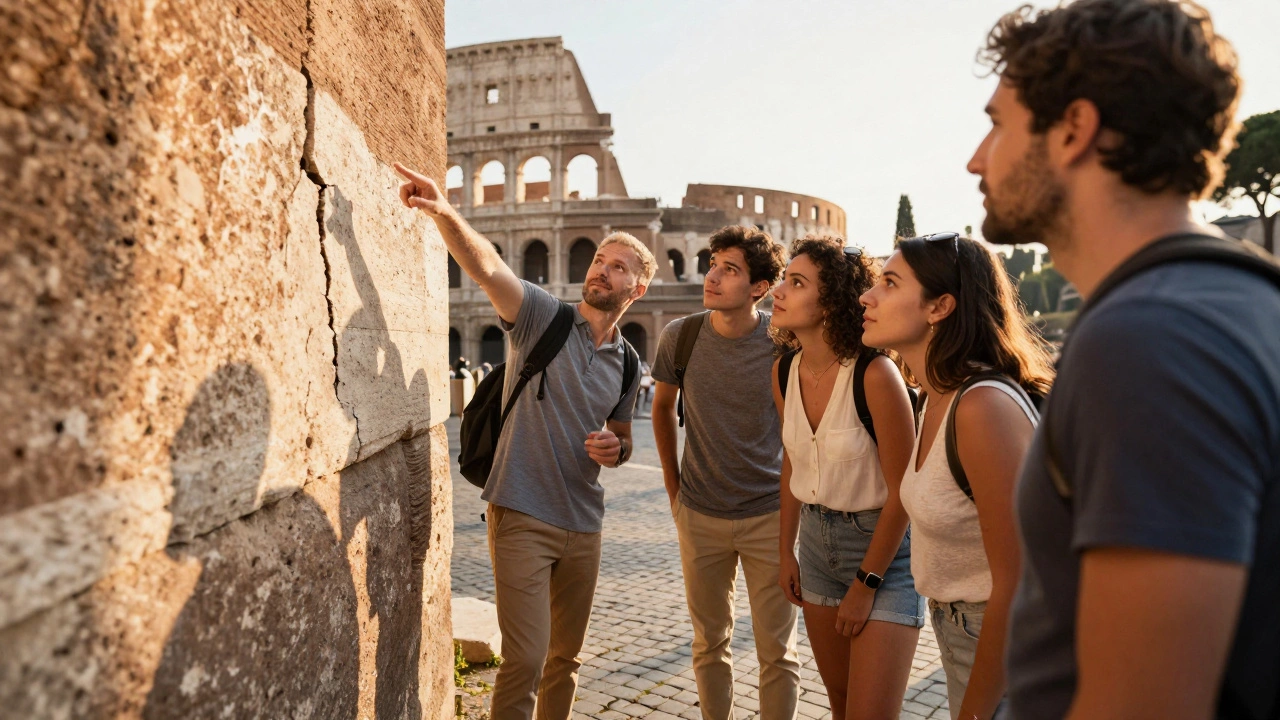
Have you ever watched a group of people walking down a narrow cobblestone street in Rome, all leaning in as a guide points to a crack in an ancient wall and says, "This is where Caesar was assassinated"? It’s not just about the history-it’s about the way the story comes alive. That’s the magic of guided tours, and millions of people choose them every year for reasons that go way beyond just "not getting lost."
They Save You Time and Stress
Planning a trip used to mean hours of Googling, cross-referencing maps, checking opening hours, and figuring out which train to take. Now, with a guided tour, all that’s handled for you. You show up, you follow the group, and you experience the place without the mental load. No more standing at a train station with a confused look, wondering if you’re on the right platform. No more missing out because you didn’t know a site closed on Tuesdays. Tour operators know the schedules, the shortcuts, the best times to avoid crowds. For people juggling jobs, kids, or just plain exhaustion, that’s priceless.
You Get Stories You’d Never Find on Your Own
Reading about the Colosseum online tells you it was built in 80 AD. A good guide tells you how gladiators trained, what they ate before a fight, and how the crowd would boo if a fighter didn’t put up a good fight. They share the gossip, the myths, the secrets-like how the Pantheon’s oculus was designed to let rain in so the floor could wash itself clean. These aren’t facts in a textbook. They’re human moments, passed down through generations of guides who’ve told these stories a thousand times. That’s the difference between reading history and feeling it.
You Don’t Have to Be an Expert
Not everyone wants to spend weeks studying Roman architecture before visiting Rome. Not everyone knows the difference between Gothic and Baroque. Guided tours level the playing field. You don’t need prior knowledge. You just need curiosity. A guide breaks things down simply: "This arch holds up the roof. That statue? It was stolen from Greece and brought here by a Roman emperor who thought it looked cool." It’s learning without pressure. No quizzes. No exams. Just listening and looking.
You Meet People You Wouldn’t Otherwise
Traveling alone can be lonely. Traveling with family can be stressful. A guided tour creates a natural social space. You’re all there for the same reason-to see something new. You end up chatting with someone from Australia while waiting for the elevator in Prague. You bond with a couple from Texas over how shocked you both were by the smell of fresh bread in a Parisian bakery. These connections stick. People swap stories, take group photos, even plan future meetups. It’s travel with built-in companionship.

Access to Places You Can’t Get Into Alone
Some of the best experiences aren’t open to the public. Think of the Vatican’s restricted archives, the hidden tunnels under the Tower of London, or the rooftop of a 16th-century palace in Kyoto. These places don’t sell tickets online. They require special permission, group bookings, or insider access. Guided tours have relationships with local operators, curators, and even private owners. You don’t just see the outside of a place-you walk through its back door. That’s not luck. That’s expertise.
Guides Know the Hidden Gems
Every city has the tourist traps-the overpriced gelato shops, the fake leather markets, the "historical" sites that were built last year. Good guides avoid those. They take you to the tiny family-run café where the espresso costs two euros and the owner remembers your name. They show you the alleyway where local artists paint murals no one else notices. They know where the best street food is, when the light hits the cathedral just right, or where the quietest bench in the park is. These aren’t on Google Maps. They’re in the guide’s head, built from years of walking the same streets.
You Learn Without Trying
People think learning means sitting in a classroom. But you absorb knowledge differently when you’re standing in front of a 2,000-year-old aqueduct, hearing how it fed an entire city without pumps or electricity. You remember it because you felt the cool stone, heard the echo, saw the way the sun lit up the arches. Guided tours turn passive sightseeing into active learning. You don’t have to take notes. You don’t have to study later. The experience sticks because it’s emotional, visual, and physical.
It Feels Safer-Especially in New Places
For many, especially solo travelers, older adults, or people visiting countries where they don’t speak the language, guided tours feel like a safety net. You’re never alone in a strange city. There’s a group. There’s a leader who knows the area. There’s a phone number if something goes wrong. It reduces anxiety. You can relax enough to enjoy the moment instead of constantly scanning for danger. That peace of mind? It’s worth more than the cost of the tour.
They’re Not Just for History
People assume guided tours are only for museums and ancient ruins. But they’re everywhere now. Food tours in Bangkok. Street art walks in Berlin. Wildlife safaris in Botswana. Coffee tastings in Colombia. Even ghost walks in Toronto. The format has evolved. It’s not about being lectured. It’s about being immersed. A guide doesn’t just tell you what something is-they show you how it fits into daily life. That’s why food tours are growing faster than any other type of guided experience.
They Make Memories Stick
Think about your last vacation. What do you remember? The hotel? The flight? Or the moment when the guide laughed while telling a story about a local legend, and you realized you’d never forget that place? Guided tours create emotional anchors. They give you a story to tell. They turn a trip into a narrative-not just a checklist of sights. That’s why people come back. Not because they saw the Eiffel Tower. But because they heard how it was almost torn down in 1909.
It’s Not Just a Tour-It’s a Connection
At the end of the day, people don’t book guided tours because they’re lazy. They book them because they want to feel something real. They want to connect-to a place, to its people, to its past. A great guide doesn’t just recite facts. They become a bridge between you and the destination. And that’s why, in a world full of apps and algorithms, guided tours still thrive. They’re human. They’re personal. And they’re unforgettable.