Vacation Budget Estimator
Calculate Your Family's 2025 Vacation Budget
Based on upper middle class family preferences for quality over quantity, time savings, and intentional travel
Estimated Cost
Based on 2025 upper middle class family travel preferences
Time Value
Equivalent to time spent planning, navigating, and resolving issues
When you make six figures, pay for private school, and still manage to save for retirement, your idea of a vacation isn’t about cutting corners. It’s about reclaiming time, space, and sanity. Upper middle class families in 2025 aren’t just traveling-they’re designing experiences that fit their rhythm, values, and budget. They don’t want to be packed like sardines in a resort. They don’t want to spend half their trip in lines or dealing with hidden fees. They want clean air, quiet pools, real food, and rooms where the Wi-Fi actually works.
They’re skipping the all-inclusives-except the good ones
You’ve seen the ads: unlimited margaritas, kids’ clubs that look like daycare centers, and buffets that serve the same seven dishes every night. Most upper middle class families have moved past these. But not because they can’t afford them. Because they’ve tried them. And found them exhausting.
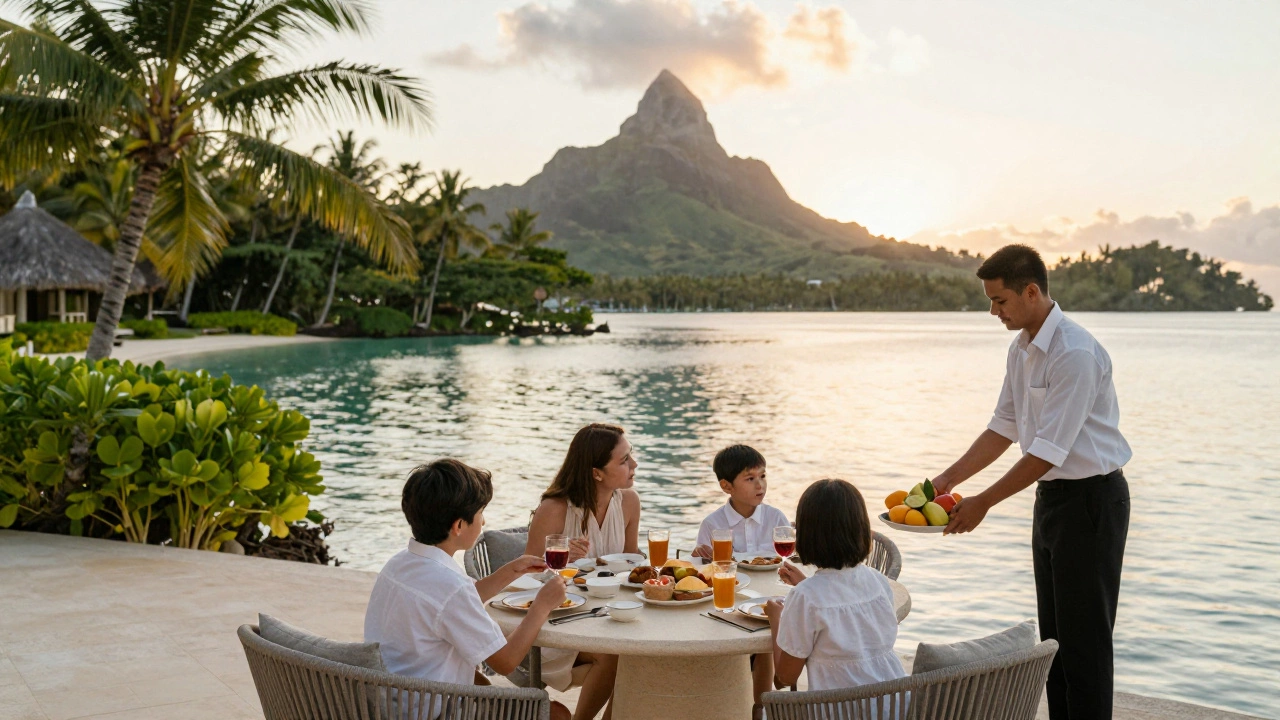
The exceptions? Resorts like Four Seasons Bora Bora or Amangiri in Utah. These places don’t call themselves all-inclusive. They just act like it. Breakfast is served on your terrace. A private guide takes your kids snorkeling. The spa therapist knows your name before you sit down. You pay $1,200 a night, but you don’t need to tip, book, or ask for anything. That’s the real luxury: zero friction.
According to a 2024 survey by Travel + Leisure, 68% of households earning $150K+ chose resorts with butler service or private concierge over traditional all-inclusives. They’re not spending more-they’re spending smarter.
Europe’s hidden corners are the new Italy
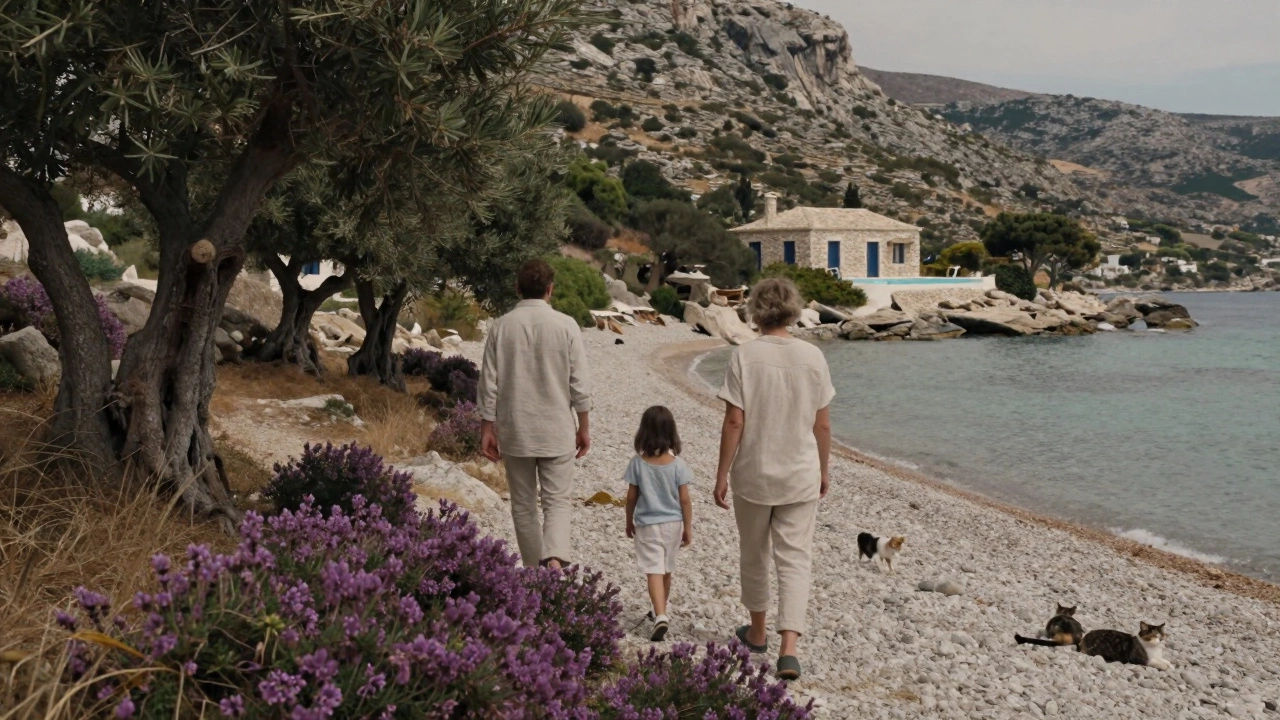
Everyone knows Rome. But where do upper middle class families go when they’ve been to Rome? They go to the Dolomites. Or the Algarve coast in Portugal. Or the island of Sifnos in Greece.
These places offer the same history, the same food, the same charm-but without the crowds. A family of four can rent a €1,800-per-week villa near Sintra, Portugal, with a pool, a chef who comes twice a week, and a 10-minute walk to a quiet beach. In Venice, that same villa would cost €4,500 and come with a neighbor’s washing line outside your window.
They’re also choosing off-season travel. October in Tuscany. Early June in the French Alps. The weather is still perfect. The restaurants still have tables. And the locals remember your name because you’re one of the few tourists around.
Domestic travel is the new international
Canada’s Banff and Lake Louise aren’t just for snowboarders anymore. In 2025, families from Toronto, Chicago, and Seattle are booking multi-week stays at luxury lodges like Fairmont Banff Springs. Why? Because flying internationally feels like a chore now. Visa apps. Language barriers. Jet lag. The cost of a single international flight for four can be $5,000.
Meanwhile, domestic options have upgraded hard. The Château Lake Louise now offers private yoga sessions with mountain views, guided wildlife walks with park rangers, and kids’ programs that teach geology and ecology-not just arts and crafts. You get the same cultural immersion, the same awe, without the passport stamp.
Same goes for the Pacific Northwest. Families are renting cabins in Bainbridge Island, Washington, or staying at the Hotel del Coronado in San Diego. They’re trading long-haul flights for train rides or road trips that become part of the vacation.
Education isn’t a buzzword-it’s the itinerary
Upper middle class parents don’t say, “Let’s go to a museum.” They say, “Let’s learn how olive oil is made in Tuscany,” or “Let’s track wolves in Yellowstone.”
They’re booking trips with companies like National Geographic Expeditions or GeoAdventures. These aren’t tours. They’re mini-educational residencies. In Costa Rica, your kids spend a day with a marine biologist studying sea turtle hatchlings. In Kyoto, they learn tea ceremony from a 70-year-old master who’s been doing it since she was eight.
These trips cost $3,000-$6,000 per person, but they’re not seen as expenses. They’re investments. And they’re booked months in advance. There’s no last-minute booking here. These families plan like they’re preparing for a college application.
They’re using travel credit cards like strategic tools
They don’t use credit cards to earn points. They use them to buy time.
The American Express Platinum Card is common. Why? Because it gives you access to airport lounges, free hotel night certificates, and priority boarding. A family of four can use their points to cover a $2,000 flight and get a $500 credit toward a private transfer. That’s $2,500 in value without spending extra cash.
They also use cards like the Chase Sapphire Reserve for automatic hotel upgrades. No calling. No begging. Just show up, and your room is suddenly a suite. That’s not luck. That’s systems.
And they never pay for parking at airports. They use the card’s $300 annual travel credit to cover that, plus a couple of airport meals. Every dollar has a job.

They’re avoiding the tourist traps-on purpose
Disney World? Maybe once. But not every year. The Eiffel Tower? Seen it. The Colosseum? Done. Upper middle class families now prioritize places that feel untouched.
They’re booking stays in the Azores. In the Faroe Islands. In the mountains of Georgia (the country, not the state). These places have no Uber. No McDonald’s. No souvenir shops selling “I ❤️ Paris” shirts. Instead, they have local farmers markets, family-run guesthouses, and dinners where the host asks about your kids’ school projects.
They’re not trying to be different. They’re just tired of being sold something.
What they won’t spend money on
They won’t pay for a 10-night cruise. Too many people. Too many buffet lines. Too many forced activities.
They won’t stay in a hotel with a “kids’ pool” that’s just a wading area with plastic toys.
They won’t book a “luxury” resort that doesn’t have air conditioning in every room.
And they won’t pay for a “private villa” that’s really just a rented house with a broken Wi-Fi router and a landlord who texts at midnight.
They’ve learned the hard way. And now they have a checklist: Wi-Fi speed, no noise complaints, laundry access, a kitchen that works, and a real bed-not a fold-out sofa.
It’s not about money. It’s about control
Upper middle class families aren’t traveling because they can. They’re traveling because they’ve earned the right to choose how they spend their limited free time. They don’t want to be entertained. They want to be restored.
They want to wake up to silence. To eat food that tastes like it was grown nearby. To have a conversation without someone in the background singing karaoke.
They’re not rich. But they’re intentional. And that’s the most expensive thing of all.
Do upper middle class families really travel more than lower income families?
Yes, but not because they have more time. They have less. Upper middle class families take fewer trips per year-usually one major vacation and one short getaway-but they spend 3-4 times more per trip. A 2024 U.S. Travel Association report found that households earning $150K+ spent an average of $8,700 on vacation, compared to $2,100 for those earning under $50K. The difference isn’t quantity. It’s quality.
Are luxury vacation packages worth it?
Only if they remove stress. A $5,000 package that includes private transfers, daily housekeeping, and a personal concierge is worth it if it saves you 15 hours of planning and 3 days of arguing about where to eat. Most upper middle class families calculate value in time saved, not dollars spent. If a package lets you sleep an extra hour each morning and skip three phone calls to the hotel front desk, it’s already paid for itself.
What’s the best time to book a luxury vacation in 2025?
Book 6-8 months ahead for peak destinations like Bali, the Amalfi Coast, or Banff. For off-season spots like Portugal in October or Georgia in May, you can wait until 3 months out. But don’t wait too long. The best villas, guides, and private chefs get snapped up fast. Most families start planning their next trip while they’re still on vacation.
Do upper middle class families still use travel agents?
Yes-but not the kind you think. They use specialized agents who focus on educational trips, luxury lodges, or private villas. These agents have direct relationships with properties and can get access to rooms that aren’t listed online. They also handle visa paperwork, dietary requests, and last-minute changes without you lifting a finger. It’s not about saving money. It’s about not having to be the project manager for your own vacation.
What’s the biggest mistake upper middle class families make when planning vacations?
Trying to do too much. They book a 10-day trip with three cities, two national parks, and a museum tour every day. Then they’re exhausted. The best trips have one anchor-like a villa in the countryside-and one or two short excursions. The rest is just breathing. Slow down. You’ve already earned the right to rest.