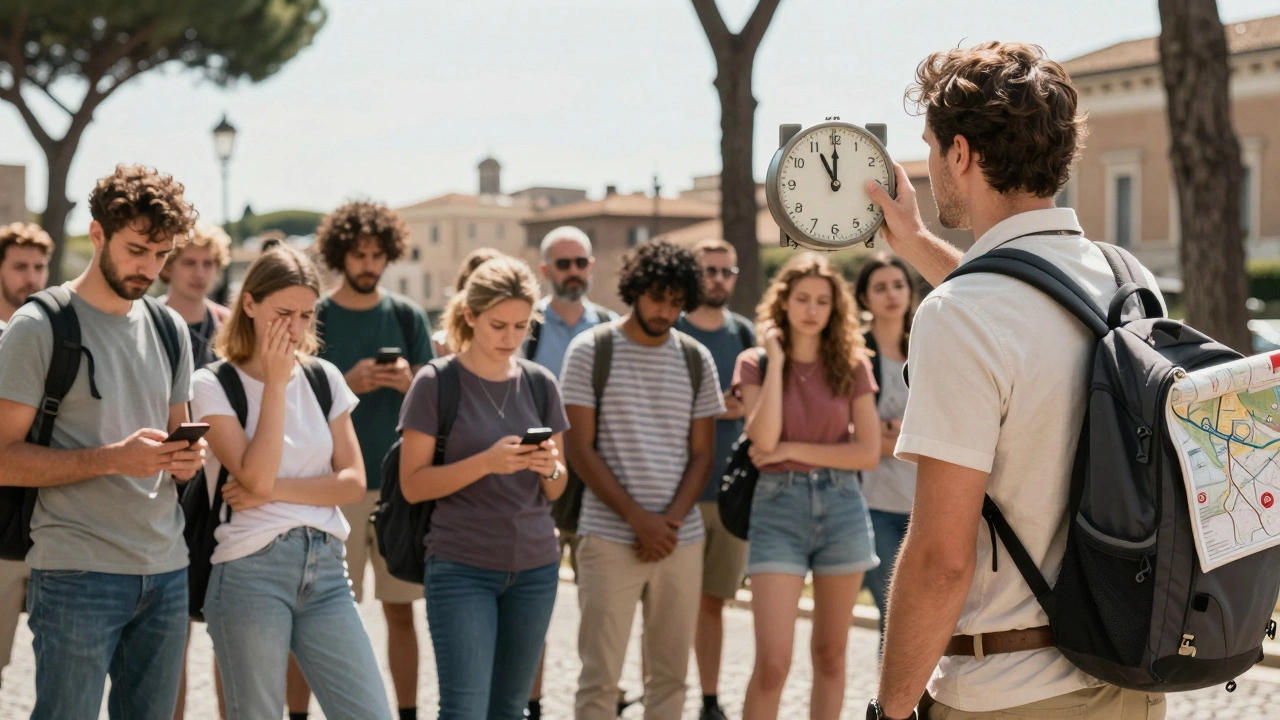
Ever been on a tour where the guide seemed more interested in their phone than the history you paid to learn? Or worse - where they made you wait 20 minutes because they were late, then blamed traffic? You’re not alone. Bad tour guides don’t just ruin the experience - they make people swear off guided tours forever. The truth is, being a great guide isn’t about memorizing facts. It’s about respect, timing, and reading the room. Here are the top 10 things tour guides should never do - and why they matter.
Don’t Be Late - Ever
Punctuality isn’t a courtesy. It’s the baseline. If you’re leading a group of 15 people who booked this tour weeks in advance, showing up 15 minutes late means 15 people wasted 15 minutes each. That’s 3.75 hours of lost time. And it’s not just about being late - it’s about not planning for delays. Traffic? Weather? Crowds? Real guides check all of that before leaving the office. One guide in Rome I spoke to keeps a backup route mapped out for every major site. Why? Because when the Vatican closes unexpectedly, you don’t just stand there. You adapt. If you’re late, you lose trust. And once trust is gone, the whole tour collapses.Don’t Guess When You Don’t Know
I’ve heard guides say, "This statue was carved by Michelangelo’s dog." No. No, it wasn’t. When you’re unsure of a fact, don’t make it up. Say, "I’m not 100% sure on that date - let me double-check after the tour." People respect honesty more than fake confidence. Tourists come from all over the world. Some have PhDs in art history. Others read every guidebook before they leave home. If you bluff, someone will call you out. And when that happens, your credibility vanishes. Real experts know their limits. They say, "I’ll find out," and follow up. That’s how you build loyalty.Don’t Monologue Without Pausing
Talking nonstop for an hour doesn’t make you knowledgeable - it makes you exhausting. People need space to absorb what they’re seeing. They need time to take photos. To ask questions. To just breathe. The best guides don’t race through their script. They pause. They look around. They say, "What stood out to you?" Then they listen. A tour in Kyoto I took had a guide who stopped every 10 minutes and asked the group what they noticed. One person pointed out the moss on the temple roof. The guide then explained how Japanese gardeners cultivate moss for spiritual calm. That moment stuck with everyone. Information sticks when it’s shared, not dumped.Don’t Ignore the Quiet People
Not everyone raises their hand. Not everyone wants to be the center of attention. But the quiet ones are still there. They’re listening. They’re thinking. They might be traveling alone. Or they might be shy. Or they might be overwhelmed by the crowd. A good guide scans the group - not just the loudest voices. If someone’s hanging back, leaning on a wall, looking confused - go to them. Ask, "Is everything clear?" Don’t wait for them to speak up. That’s not just polite. It’s professional. One guide in Prague noticed a woman standing alone near the end of the tour, staring at a plaque. He walked over, asked if she wanted to know what it said, and spent five minutes translating it. She cried. She later emailed the company to thank them. That’s the kind of detail that turns good tours into unforgettable ones.
Don’t Sell Stuff on the Tour
You’re not a salesperson. You’re a guide. If you’re pointing at a church and then immediately say, "By the way, the gift shop right inside sells the exact candle the priest used in 1723 - only $45," you’ve crossed a line. Tourists didn’t pay to be pitched to. They paid to learn. If you’re getting a commission from a shop, be upfront - but don’t make it part of the narrative. Say, "If you’d like to visit the nearby bookstore, it’s a five-minute walk and has original prints. I’m not getting paid to send you there - just letting you know." Transparency matters. Pushy sales tactics make people feel used. And once they feel used, they leave bad reviews. And those stick.Don’t Treat Everyone the Same
A group of 8-year-olds needs a different tour than a group of 70-year-olds. A family with three kids isn’t the same as a couple on their anniversary. A group of history buffs wants depth. A group of Instagrammers wants photo spots. One guide in Barcelona told me she changes her script before every tour. She asks the booking agent: "Any special needs? Kids? Mobility issues? Anniversary?" Then she adjusts. For families, she turns facts into games. For couples, she finds quiet corners with great views. For seniors, she slows down and offers seats. One-size-fits-all tours are lazy. And they’re obvious. People notice when you’re not paying attention to them.Don’t Use the Same Script Every Day
If you’ve been giving the same tour for five years and your script hasn’t changed, you’re not a guide - you’re a recording. Tourists can tell. They hear the same phrases. The same jokes. The same awkward pauses where you’re clearly reading from a note. Update your stories. Add new research. Mention recent discoveries. A guide in Athens started including details about the 2023 restoration of the Parthenon friezes. Tourists loved it. Why? Because it felt fresh. Because it showed she kept learning. Don’t just recite. Reflect. Add. Evolve. Your audience deserves more than a canned performance.Don’t Rush Through Sites
I’ve been on tours where the guide said, "We’ve got 15 minutes at the Taj Mahal - let’s move!" That’s not a tour. That’s a sprint. The Taj Mahal isn’t a photo op. It’s a monument built over 20 years by thousands of workers. It’s marble that changes color with the sun. It’s a love letter in stone. You can’t do it justice in 15 minutes. Same goes for the Colosseum, the Alhambra, Angkor Wat. Rushing makes people feel like they didn’t experience anything - just saw something. The best guides give people time to sit, to look, to feel. They say, "Take five minutes. Just stand here. Listen to the wind." That’s what people remember.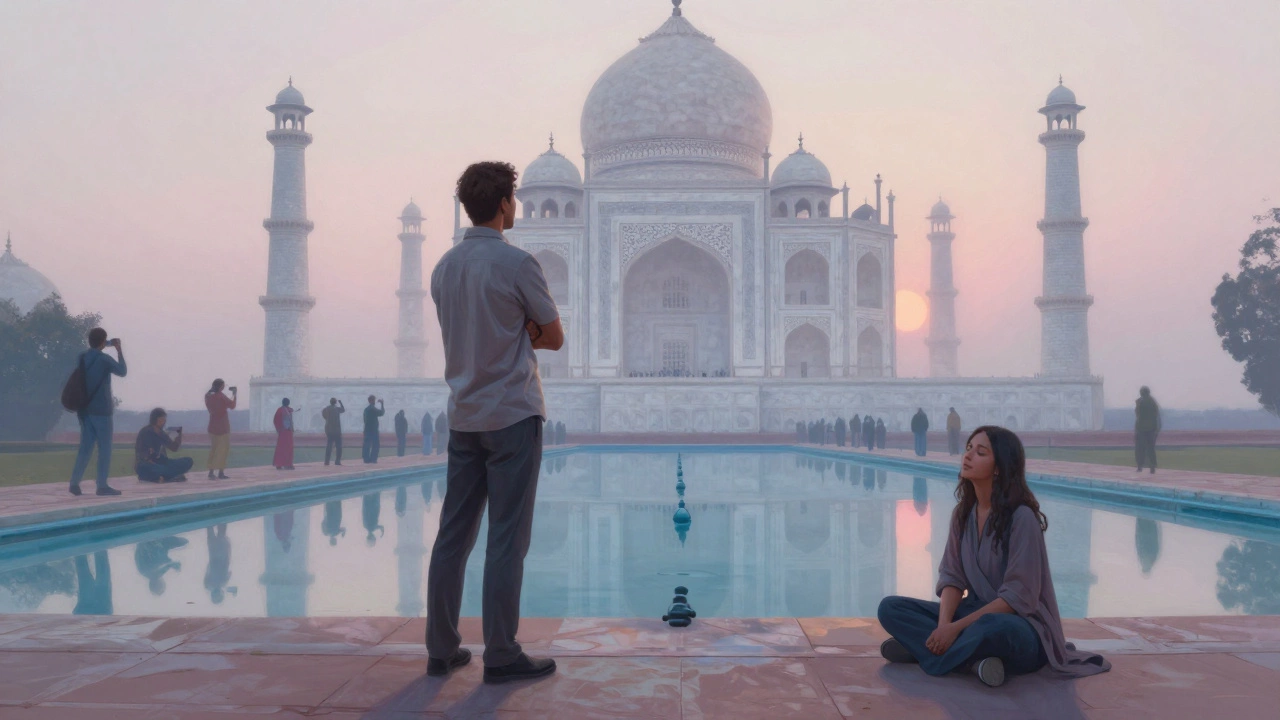
Don’t Be Disrespectful to Locals
If you roll your eyes at a vendor, make fun of the local food, or say, "This is why they can’t get things right," you’re not just being rude - you’re breaking trust. Tourists listen to you. If you disrespect the culture, they’ll copy you. I saw a guide in Marrakech tell his group, "Don’t buy from that stall - the prices are ridiculous." The vendor heard. He didn’t say anything. But he stopped smiling. The group left feeling guilty. A better guide would’ve said, "These prices are fair for handmade goods. If you want to bargain, start at half and be polite. It’s part of the culture." Guides set the tone. Be the one who teaches respect, not contempt.Don’t Forget the Basics
It sounds simple, but so many guides forget the little things. Do you have water? A first-aid kit? Extra batteries for your mic? A printed backup of your route? Do you know where the nearest bathroom is? Are you dressed appropriately for the weather? I once had a guide in Toronto in January who wore sandals. He didn’t bring water. He didn’t have a map. He just hoped the group would follow him. Halfway through, two people had to leave because they were freezing. You’re not just a storyteller. You’re a leader. Your job is to keep people safe, comfortable, and informed. If you can’t handle the basics, you shouldn’t be leading a group.Final Thought: It’s Not About You
The best tour guides I’ve met don’t talk about themselves. They don’t brag about how many tours they’ve done. They don’t tell stories about their personal life. They don’t try to be funny. They don’t need to. They’re quiet, present, and deeply attentive. They notice when someone’s cold. They pause when someone’s moved. They answer questions without rushing. They admit when they don’t know. And they leave people feeling like they learned something - not just saw something. That’s the difference between a tour and a memory.What should a tour guide do instead of guessing facts?
A tour guide should say, "I’m not sure about that exact detail, but I’ll find out and get back to you." Then, they should follow up with the correct information after the tour - via email or a group message. This builds trust and shows professionalism. Tourists appreciate honesty more than false confidence.
Is it okay for a tour guide to accept tips from tourists?
Yes, if it’s clearly optional and not expected. Many tour companies include a tip line in their booking confirmation. A good guide never pressures guests for tips. They earn them by being knowledgeable, punctual, and thoughtful. If a guest offers a tip, a simple "Thank you, that means a lot" is enough. Never mention money unless the guest brings it up first.
How can a tour guide handle a disruptive group member?
Stay calm and redirect. If someone is talking loudly, interrupting, or being disrespectful, make eye contact and say, "I appreciate your enthusiasm - let’s give everyone a chance to hear the story." If it continues, speak to them privately after the tour. Most disruptions come from excitement, not malice. A quiet word often fixes it.
Should tour guides use microphones?
Yes, if the group has more than six people or if you’re in a noisy environment. But don’t rely on it. Practice speaking clearly without it. Always carry spare batteries and a backup method - like a small whiteboard or printed handouts. A microphone should enhance your voice, not replace your presence.
What’s the biggest mistake new tour guides make?
Trying to impress instead of connecting. New guides often memorize too many facts and forget to listen. The goal isn’t to sound smart - it’s to make people feel seen. The best tours are conversations, not lectures.