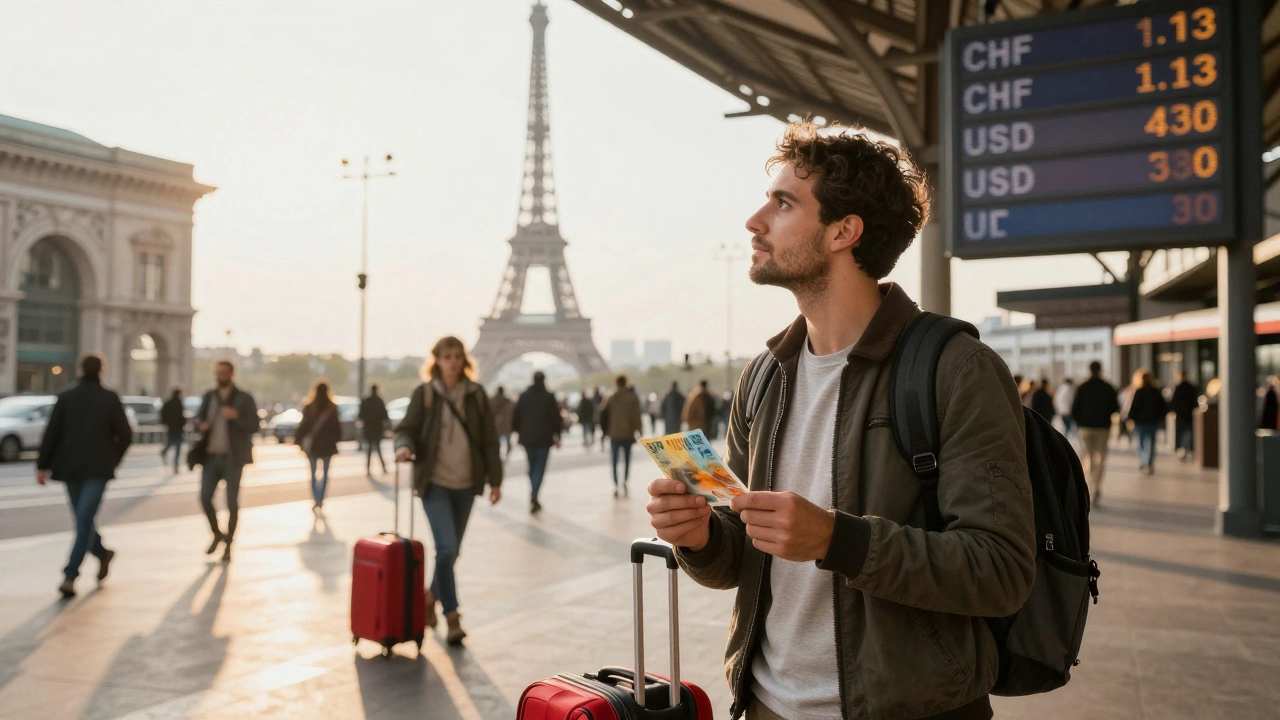
Currency Value Calculator
Calculate Your Travel Value
See how much your money is worth in foreign currencies. The Swiss Franc is currently the strongest currency globally, making travel to Europe, Japan, and Southeast Asia more affordable than ever.
When you’re planning a holiday, the last thing you want is to get stuck paying way more than you expected because the exchange rate swung overnight. If you’re thinking about booking a trip to Europe, Japan, or even the Maldives this year, knowing which currency is the strongest right now can save you hundreds - or even thousands - of dollars. And no, it’s not the US dollar. Not anymore.
The Swiss Franc Is King Right Now
As of February 2026, the Swiss franc (CHF) is the strongest currency in the world. Not because Switzerland is booming in exports, but because it’s the safest place left for money when everything else feels shaky. Investors run to the franc during global uncertainty - whether it’s war, inflation, or banking stress. And right now, with tensions in the Middle East, Europe’s energy uncertainty, and slowing growth in the US and China, the franc has surged.
The Swiss franc is up 12% against the US dollar and 18% against the euro over the last year. That means if you paid $1,000 for a hotel in Paris last year, you’d pay just $820 today for the same room if you’re using US dollars. But if you’re holding Swiss francs? You’d pay only $760. That’s real savings.
Why the Swiss Franc Stays Strong
Switzerland doesn’t print money like other countries. The Swiss National Bank is famously cautious. They don’t chase low interest rates to boost growth. They don’t flood the market with cash. They protect the value of the franc. That’s why, even though Switzerland isn’t a giant economy, its currency is treated like gold in a digital form.
Compare that to the US dollar. It’s still the world’s most used currency, but the US has over $34 trillion in national debt. The Federal Reserve keeps interest rates high to fight inflation, but that’s not enough to keep investors confident. Meanwhile, the euro is stuck between weak growth in Germany and political noise in France. The British pound? Still recovering from Brexit hangovers and sluggish productivity.
The Swiss franc doesn’t have flashy headlines. No tech startups, no Silicon Valley hype. But it has stability. And when you’re spending your vacation budget, stability is everything.
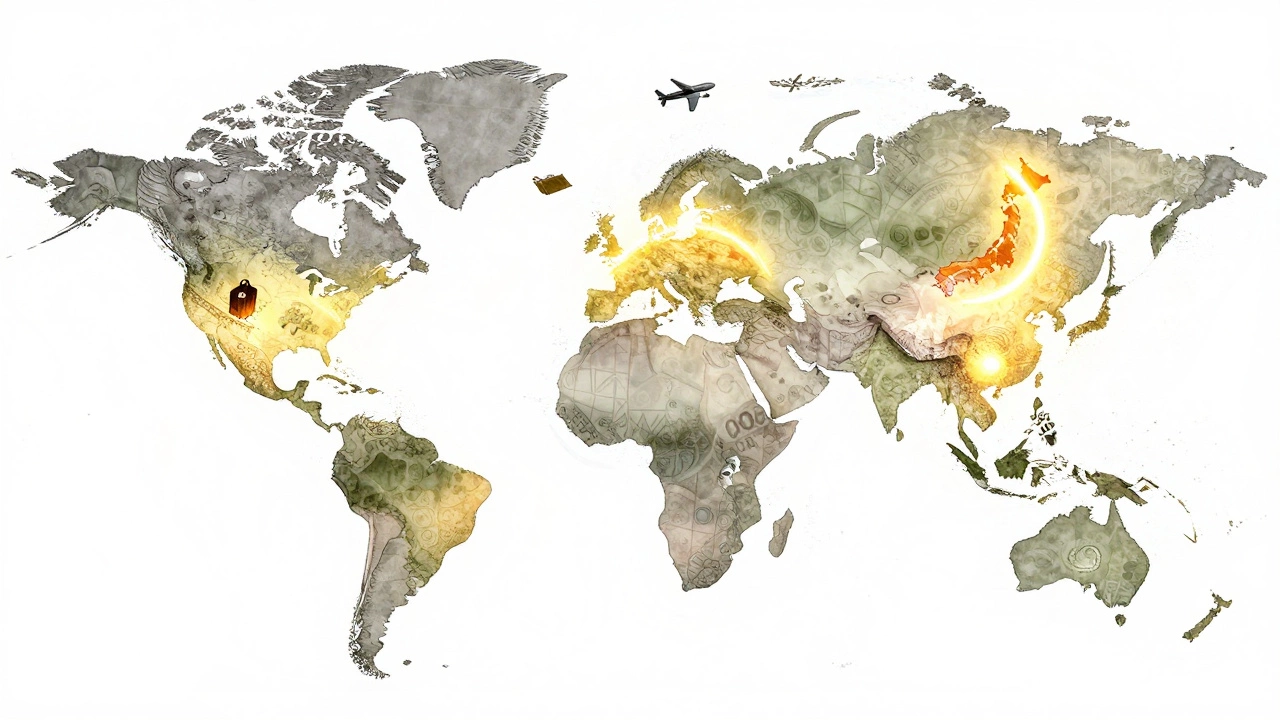
How This Affects Your Holiday Deals
If you’re planning a trip to a country that uses a weaker currency, now is the best time in years to go. Here’s what’s happening on the ground:
- Europe: The euro is down 15% against the franc. That means hotels in Italy, Spain, and Portugal are effectively 15% cheaper for franc holders - and even better for US and Canadian travelers. A €120 hotel room? It’s like paying $102 USD now.
- Japan: The Japanese yen hit a 38-year low against the franc in late 2025. Tokyo, Osaka, Kyoto - all of it’s suddenly affordable. A $200 night in a ryokan? You can get it for $145 if you time your exchange right.
- Thailand and Bali: The Thai baht and Indonesian rupiah are both down 20%+ against the franc. A week in Bali used to cost $800. Now? $640. And that includes a private villa with a pool.
- UK: The pound is weak, but not as weak as you’d think. Still, London hotels are offering 10-12% discounts to attract North American travelers. Combine that with the strong franc, and you’re looking at a luxury city break for less than $1,000.
Here’s the kicker: if you’re booking through a Canadian or US-based travel site, they often lock in rates in USD or CAD. But if you pay directly in the local currency - say, euros or yen - you’ll get the real exchange rate. And that’s where the savings explode.
When to Buy Foreign Currency
You don’t need to rush out and buy francs. You don’t even need to. But you do need to time your currency exchange right.
Here’s what works:
- Wait until you’re within 30 days of your trip. Exchange rates shift daily. Too early, and you might miss a better rate.
- Use a no-fee credit card that doesn’t charge foreign transaction fees. Cards like the Rogers World Elite Mastercard or the Scotia Visa Infinite are great for this.
- Withdraw cash from ATMs abroad - not at the airport. Airport exchange kiosks charge 8-12% extra. ATMs give you the real interbank rate.
- Pay in the local currency, not in your home currency. If a hotel in Rome asks if you want to pay in USD or euros - always pick euros.
Some people think they should buy currency months in advance. That’s a trap. The franc is strong now, but it won’t stay that way forever. The Swiss economy is small. If global markets calm down, the franc will drop. So wait. Watch. Then act.

What About Other Strong Currencies?
The top five strongest currencies right now, ranked by value against the US dollar:
| Rank | Currency | Symbol | Value vs USD | Why It’s Strong |
|---|---|---|---|---|
| 1 | Swiss Franc | CHF | $1.13 | Safe-haven status, low debt, stable central bank |
| 2 | Bahraini Dinar | BHD | $2.65 | Backed by oil, pegged to USD, limited supply |
| 3 | Omani Rial | OMR | $2.60 | Oil-rich, stable government, fixed exchange |
| 4 | Kuwaiti Dinar | KWD | $3.25 | Oil reserves, high per capita income, no foreign debt |
| 5 | Jordanian Dinar | JOD | $1.41 | Pegged to IMF basket, low inflation |
Here’s the thing: Bahrain, Oman, and Kuwait are not top holiday destinations. You’re not going there for beaches or culture. You’re going for oil money. The real travel value? Switzerland, Japan, and Thailand. They’re beautiful, safe, and now - thanks to the franc - shockingly affordable.
What This Means for Your Next Trip
If you’ve been putting off a trip to Europe because it felt too expensive - now is the time. The same goes for Japan. The yen is at its weakest in decades. A $1,500 trip to Kyoto last year? It’s $1,200 today. With flights still relatively cheap and hotels offering early-bird discounts, you’re looking at a luxury getaway for under $2,000.
Don’t wait for a ‘deal’ on a travel site. The real deal is in the exchange rate. And right now, the Swiss franc is the invisible key that unlocks the world.
Book your flights. Pick your destination. But before you pay - check the exchange rate. Pay in local currency. Use the right card. And let the strength of the franc do the rest.
Is the Swiss franc the strongest currency because Switzerland is rich?
Not exactly. Switzerland isn’t the richest country by GDP. But it’s the most stable. The Swiss National Bank doesn’t print money to solve problems. It protects the franc’s value. That makes it a safe place for global investors during crises, which drives up demand - and the exchange rate.
Should I exchange money before I leave or wait until I get there?
Wait until you’re close to departure. Exchange rates change daily. If you’re traveling in the next 30 days, exchange a small amount before you go - just enough for the airport taxi. Then use your no-fee credit card for everything else, and withdraw cash from ATMs abroad. That’s where you get the best rate.
Can I use US dollars in Europe or Japan?
Technically, yes - some tourist spots accept USD. But you’ll pay a terrible exchange rate. Always pay in the local currency. Your credit card will give you the real rate. If you pay in USD, the merchant’s system will convert it at a markup - often 10% or more.
Why is the Japanese yen so weak?
Japan has kept interest rates near zero for over 20 years to fight deflation. Meanwhile, other countries like the US raised rates to fight inflation. That made the yen less attractive to investors. But it also made Japan incredibly cheap for travelers. It’s a trade-off - and right now, it’s a great one for tourists.
Is the US dollar still strong?
It’s still the world’s most used currency - but not the strongest. The dollar has lost value against the franc, yen, and even the Canadian dollar over the last year. That’s why Canadian travelers are getting better deals abroad than Americans right now.