London Visitor Comparison Calculator
Compare London's Visitor Numbers
London had 21 million international visitors in 2025. See how your selected city compares to London's massive tourism numbers.
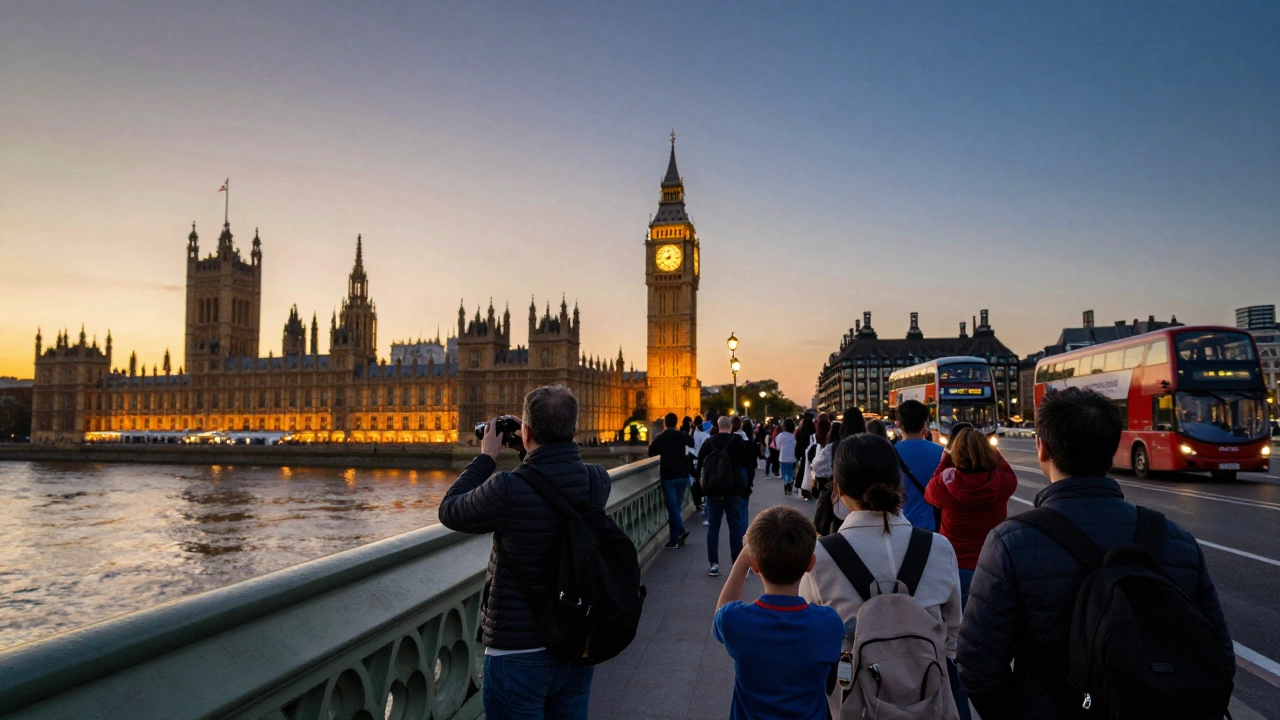
If you’ve ever stood on Westminster Bridge at sunset, dodged a double-decker bus on Oxford Street, or waited 45 minutes for a cup of tea near Tower Bridge, you’ve felt it - the overwhelming buzz of London. It’s not just the capital. It’s the most touristy city in the UK, by a wide margin. In 2025, London welcomed over 21 million international visitors and another 12 million domestic day-trippers. That’s more than the entire population of Scotland. No other UK city comes close.
Why London Tops the List
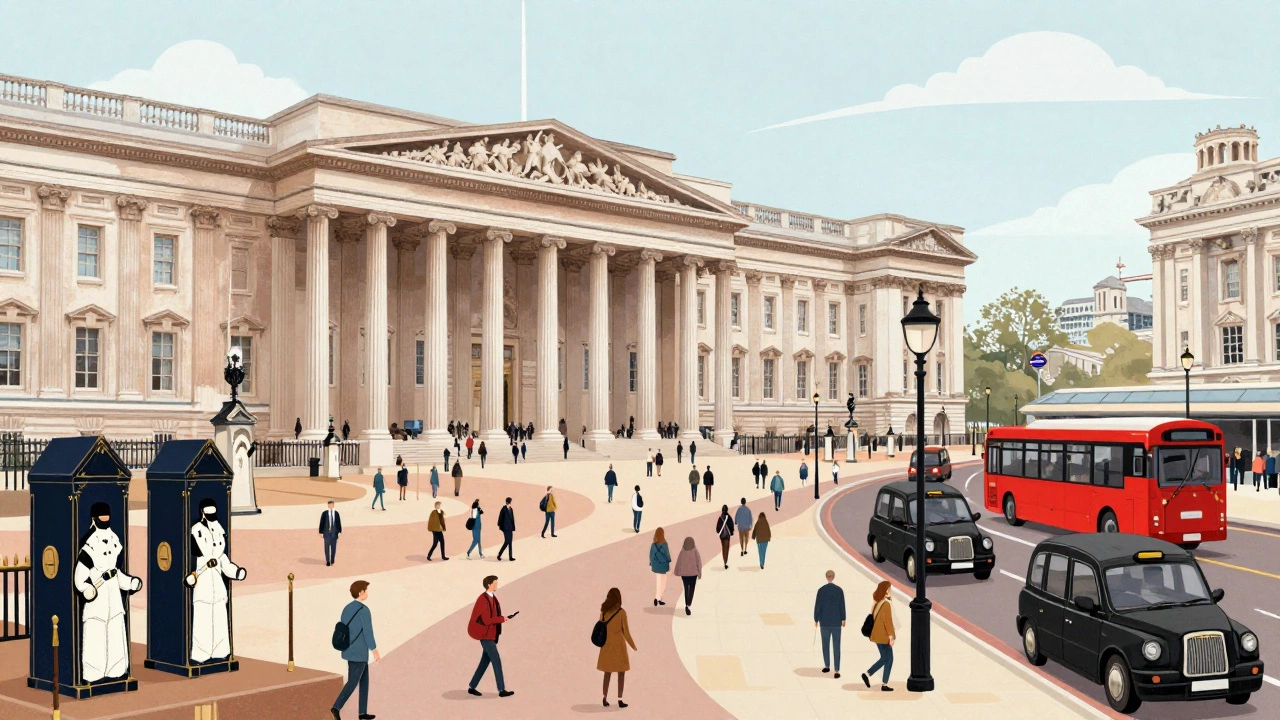
London doesn’t just have one big attraction - it has dozens, all packed into a compact area. The British Museum? Free, and it gets over 5 million visitors a year. The Tower of London? Over 3 million. Buckingham Palace’s Changing of the Guard? Lines stretch down the Mall on a sunny Saturday. Even the London Eye, which opened in 2000, still draws 3.5 million riders annually.
It’s not just landmarks. It’s the sheer variety. You can walk from a 900-year-old castle to a Michelin-starred restaurant in 20 minutes. You can see Shakespeare performed in the same city where you catch a K-pop concert. There’s no other place in the UK where you can visit a royal palace, a Roman ruin, a modern art gallery, and a street market all in one day.
And it’s not just foreign tourists. London is the go-to destination for UK staycations. A 2025 survey by VisitBritain found that 68% of British households planned at least one trip to London within the year. For many, it’s not a luxury - it’s a tradition. Grandparents take grandkids. Couples celebrate anniversaries. Friends reunite. Everyone ends up in London eventually.
How Other Cities Compare
Edinburgh has its festivals. Manchester has its music scene. Bath has its Roman baths. But none of them come close to London’s numbers.
Edinburgh, the second most visited city in the UK, pulled in about 4.2 million international visitors in 2025. That’s impressive - especially during the August Festival season - but it’s less than a quarter of London’s international footfall. Even when you add domestic visitors, Edinburgh’s total is around 5.8 million. Still, less than a third of London’s.
Manchester gets about 3.1 million visitors a year. Cardiff? Roughly 2.5 million. York? Just under 2 million. These are all fantastic cities with deep history and charm, but they’re destinations. London is a magnet.
One reason? Accessibility. London has six major airports, including Heathrow - the busiest international airport in Europe. It’s also the hub of the UK’s rail network. You can get from Birmingham to London in 1 hour 20 minutes. From Leeds? Just over 2 hours. From Glasgow? Under 5 hours. No other city in the UK has that kind of transport density.
What Makes London Feel So Crowded
It’s not just the numbers - it’s how they’re packed together. Piccadilly Circus on a Friday night feels like a human wave. The Underground hits 5 million rides a day. The average wait for a ticket at King’s Cross is 12 minutes. You’ll find more people in a single London park on a summer weekend than in the whole of Cornwall.
Even the quiet spots get busy. The Serpentine in Hyde Park? Filled with picnickers by 11 a.m. on a Saturday. The South Bank? A continuous line of tourists walking past street performers, ice cream carts, and open-air art installations. Even the quietest alley in Camden Market has someone taking a selfie with a vintage jacket.
And it’s not just summer. London is busy year-round. Christmas markets in November. The New Year’s Eve fireworks draw over a million people to the Thames. Even in January, when the weather is gray and the pubs are full of locals nursing hangovers, the museums are packed. The British Library alone sees 1.8 million visitors annually - and that’s just for exhibitions.
Is It Worth It?
Yes - if you know how to navigate it. You don’t have to join the crowds at the London Eye. Skip the gift shops on Oxford Street. Go to the National Gallery on a Tuesday morning. Visit the Victoria and Albert Museum before 10 a.m. when the tour groups haven’t arrived yet. Walk along the Regent’s Canal instead of the Thames. Eat at a local pub in Peckham instead of a tourist trap in Soho.
London’s magic isn’t in the postcard spots. It’s in the hidden corners: the tiny bookshop in Bloomsbury, the Ethiopian café in Brixton, the 18th-century bowling alley under a pub in Clerkenwell. These places don’t show up on Google Maps top results. But locals know them. And if you take the time to find them, you’ll see a London most tourists never notice.
What You Should Know Before You Go
If you’re planning a trip to London - whether you’re from Manchester, Cardiff, or another country - here’s what actually matters:
- Get an Oyster card - or use contactless. Paying cash for buses or tubes is slower and more expensive.
- Book major attractions in advance - even if they’re free. The British Museum doesn’t charge, but timed entry slots fill up fast.
- Avoid peak hours - the Tube between 7:30 a.m. and 9:30 a.m. and 5 p.m. to 7 p.m. is a sweatbox. Walk instead.
- Don’t eat near major landmarks - prices double. Head one street over.
- Use local events - the Notting Hill Carnival, the Lord Mayor’s Show, and the London Literature Festival are free and way less crowded than the tourist hotspots.
London isn’t going to slow down. It’s too big, too connected, too full of things to do. But it doesn’t have to be overwhelming. You can enjoy it - even if you’re just one of the 33 million people who visit each year.
What’s Next for London Tourism
London is investing heavily in spreading out the crowds. New cultural hubs are opening in places like Stratford, Croydon, and Walthamstow. The Elizabeth Line has made east London easier to reach. Museums in Hackney and Newham are seeing record attendance. The city’s goal isn’t to reduce tourism - it’s to make it more even.
For now, though, London remains the undisputed top spot. It’s not just the most touristy city in the UK. It’s one of the most visited cities in the world. And for good reason. No other place offers this mix of history, culture, and chaos - all in one place.
Is London really the most touristy city in the UK?
Yes. In 2025, London received over 21 million international visitors and 12 million domestic day-trippers - more than all other UK cities combined. Edinburgh, the second most visited, had just over 4 million international visitors.
What’s the least touristy city in the UK?
There’s no official ranking, but places like Carlisle, Ripon, or Llandrindod Wells see fewer than 100,000 visitors a year. These towns are quiet, authentic, and rarely crowded - perfect if you want to escape the crowds.
Are UK staycations growing because of London?
Partly. London is the top destination for UK staycations, with 68% of British households planning a trip there in 2025. But people are also exploring more regional cities like Liverpool, Newcastle, and Brighton - especially for weekend breaks.
How do I avoid crowds in London?
Visit museums early on weekdays, skip peak Tube hours, walk along canals instead of rivers, eat in neighborhoods like Peckham or Brixton, and use local events like the Notting Hill Carnival instead of major landmarks. The city is huge - you just need to know where to look.
Is it cheaper to visit London or other UK cities?
London is more expensive - accommodation, food, and transport all cost more. But many attractions are free, like the National Gallery, Tate Modern, and the British Museum. If you plan carefully, you can visit London on a budget. Smaller cities like York or Bath offer lower prices, but fewer options.