
London Staycation Risk & Compliance Checker
Booking Details
Analysis Result
Select your accommodation details and click analyze to see if your staycation is safe.
Picture this: you’ve booked a cozy Airbnb in Shoreditch, sorted out your Oyster card, and planned a weekend of proper fish and chips. But then you pause. You remember hearing about some strict new limits on how long you can stay in a rental property. Suddenly, that dreamy three-night escape feels risky. Is there really a 90-day rule in London that could get your booking cancelled or even fined?
The short answer is yes, but it’s not what most people think. It isn’t a law stopping you from visiting London for two weeks. It’s a regulation aimed at landlords and short-term lets, specifically targeting properties rented out for less than 90 days in a calendar year without proper permission. For the average traveler planning a staycation, understanding this rule means knowing which platforms to use, how to spot compliant listings, and why some 'cheap' deals might actually be illegal.
Where Did This Rule Come From?
To understand the current landscape, we have to look back at the housing crisis in London. Over the past decade, an increasing number of homeowners turned their empty flats into full-time Airbnbs. Neighbors complained about noise, loss of community space, and skyrocketing rent prices because fewer long-term rentals were available. The government stepped in to protect residential neighborhoods.
In 2018, London introduced a cap on short-term lets. The rule states that you cannot let a self-contained property (like an entire flat or house) for more than 90 nights in a single calendar year unless the landlord has obtained express consent from the local council. This wasn't just a suggestion; it was enforced through licensing schemes. If a landlord exceeds this limit without permission, they face hefty fines-often starting at £5,000-and potential criminal charges.
This policy directly impacts the supply of accommodation available to tourists and staycationers. Many properties that used to be listed on major platforms had to remove themselves or drastically reduce their availability. As a result, finding a legitimate short-term rental in central London requires a bit more awareness than simply clicking 'book now.'
Who does the 90-day rule apply to?
The rule applies to landlords and hosts renting out entire residential properties (houses, flats, apartments) for short periods. It does NOT apply to hotels, bed and breakfasts (B&Bs), hostels, or guest houses where the owner lives on-site and provides services like breakfast. It also doesn't restrict guests; you are free to stay as long as you want, provided the property is legally allowed to host you.
How Does This Affect Your London Trip?
If you're booking a hotel, a B&B, or a hostel, you don't need to worry. These establishments operate under different licenses and are exempt from the 90-day cap. The rule targets the 'sharing economy' sector, primarily platforms like Airbnb, Vrbo, and Booking.com's home-stay options.
For travelers using these platforms, the impact is subtle but significant. Legitimate hosts will only list their properties for up to 90 nights per year. This means popular dates-like summer weekends, Christmas markets, or major events like Wimbledon-might fill up faster, or prices might be higher due to scarcity. Conversely, you might find better deals during quieter months when hosts are trying to maximize their allowed rental days.
Here’s a practical checklist to ensure your stay is hassle-free:
- Check the listing type: Avoid 'entire place' listings if the host seems vague about their license status. Hotels and B&Bs are safer bets for guaranteed compliance.
- Look for licensed badges: Some councils require hosts to display a license number on their profile. While not all do, reputable hosts often mention their compliance with local laws.
- Beware of 'off-platform' deals: If a host asks you to pay outside the app to avoid fees, they might also be avoiding regulations. Stick to official payment channels for protection.
- Read recent reviews: Comments mentioning 'quiet neighbors' or 'professional management' often indicate a well-run, compliant property.
Licenses and Local Council Rules
London isn't a monolith when it comes to enforcement. Each of the 32 boroughs plus the City of London has its own approach. Some councils, like Camden and Kensington & Chelsea, have been particularly aggressive in enforcing the 90-day limit. Others may have additional requirements, such as mandatory licensing for all short-term lets regardless of duration.
For example, in certain areas, even if a host stays under the 90-night cap, they still need a specific 'Short-Term Let License' to operate legally. Without it, the property is considered unlicensed, and guests could theoretically be asked to leave if authorities raid the building. While rare for individual tourists, it’s a risk worth noting.
| Type | Subject to 90-Day Cap? | License Required? | Risk Level for Guest |
|---|---|---|---|
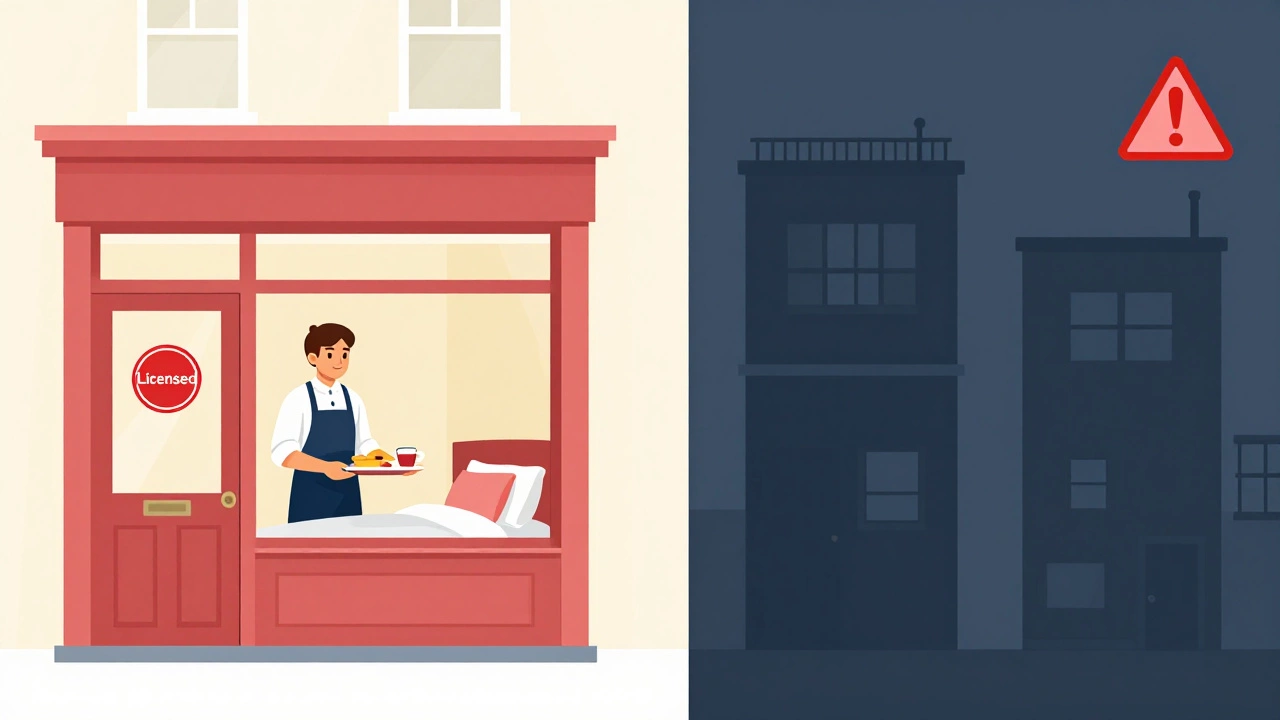
| Hotel | No | Yes (Standard Hotel License) | Very Low |
| B&B / Guest House | No | Yes (If providing food/service) | Low |
| Airbnb Entire Flat | Yes (Max 90 nights/year) | Varies by Borough | Medium |
| Private Room Share | No (Usually exempt) | Often Exempt | Low |
Alternatives to Short-Term Lets
If the uncertainty around short-term lets stresses you out, consider alternative accommodations that are fully regulated and exempt from the 90-day rule. London offers a vibrant hospitality scene beyond big chain hotels.
Bed and Breakfasts: Staying in a B&B gives you a local experience without the regulatory gray area. Owners live on-site, so they’re invested in keeping things peaceful. Plus, you get breakfast included, which saves money and time.
Hostels: Modern hostels in London aren’t just for backpackers. Many offer private rooms with en-suite bathrooms, co-working spaces, and social events. They’re budget-friendly and always legal.
Extended-Stay Apartments: If you’re planning a longer trip (over a week), look for serviced apartments designed for business travelers. These are typically managed by companies with commercial leases, bypassing the residential 90-day cap entirely.
Common Misconceptions About the Rule
There’s a lot of misinformation floating online. Let’s clear up the biggest myths:
Myth 1: I can’t stay in London for more than 90 days.
Reality: There is no limit on how long a tourist can visit London. Visa rules apply for non-EU citizens, but for UK residents or those with appropriate visas, you can stay indefinitely. The 90-day rule is about the *property*, not the *person*.
Myth 2: All Airbnbs are illegal.
Reality: Thousands of Airbnbs in London are perfectly legal. Hosts who respect the 90-night limit and obtain necessary licenses operate safely. The issue is with those who exceed the limit or skip licensing.
Myth 3: I’ll be fined if I book an illegal property.
Reality: Fines target the landlord, not the guest. However, you might face inconvenience if your booking is abruptly cancelled or if you’re asked to leave due to enforcement action.
Tips for Booking a Compliant Stay
To ensure your London staycation goes smoothly, follow these steps:
- Use Reputable Platforms: Stick to well-known sites like Airbnb, Booking.com, or Vrbo. They increasingly verify host compliance with local laws.
- Message the Host: Ask directly: "Are you licensed to rent this property for short-term stays?" Most honest hosts will reply promptly.
- Check Reviews for Consistency: Look for reviews spanning different times of the year. A property with only one review might be a new or suspicious listing.
- Consider Location: Central London boroughs enforce rules strictly. Suburban areas might be more relaxed, but verification is still wise.
- Book Early: Since supply is limited by the 90-day cap, popular dates sell out faster. Plan ahead to secure your preferred accommodation.
The Future of London Staycations
The 90-day rule is likely here to stay. With housing pressures continuing across the UK, governments are unlikely to loosen restrictions on short-term lets. In fact, some cities are considering lowering the cap further or expanding licensing requirements.
For travelers, this means adapting. Embrace the variety London offers-from historic pubs converted into guest houses to boutique hotels in former factories. By choosing compliant accommodations, you support a sustainable tourism model that benefits both visitors and local communities.
So, go ahead and book that London getaway. Just keep an eye on the details, ask the right questions, and enjoy the city without worrying about hidden rules. After all, the best part of a staycation is relaxation, not navigating legal jargon.
Can I stay in an Airbnb in London for 10 days?
Yes, absolutely. The 90-day rule limits the *host* to renting out the property for a maximum of 90 nights per year. It does not limit how long *you* can stay. As long as the host has available nights within their annual allowance and holds any required licenses, your 10-day stay is perfectly legal.
What happens if my Airbnb is shut down by the council?
If a property is found to be operating illegally (e.g., exceeding the 90-night cap without license), the council may order it to close immediately. Guests might be asked to leave. In such cases, contact the booking platform immediately for a refund. Always keep communication records and receipts to facilitate reimbursement.
Do hotels have to follow the 90-day rule?
No. Hotels, motels, bed and breakfasts, and guest houses are exempt from the 90-day short-term let cap. They operate under separate hospitality licenses and can accept guests year-round without restriction.
Is the 90-day rule applied in other UK cities?
Yes, similar rules exist in other major UK cities like Edinburgh, Manchester, and Bristol. Each local authority sets its own policies, but many have adopted caps between 30 to 90 days to manage housing pressure. Always check local regulations if traveling outside London.
How can I tell if an Airbnb host is licensed?
While not all hosts display license numbers, you can ask them directly via the messaging system. Legitimate hosts in London should be able to confirm they comply with the 90-night rule and hold any necessary borough licenses. Be wary of hosts who refuse to answer or seem evasive.