Most people plan their cultural trips with a checklist: visit the Louvre, see the Pyramids, walk the Great Wall. They book tickets in advance, follow guidebooks, and stick to the most popular spots. But there’s another kind of traveler-one who doesn’t plan at all. They wander without a map, talk to strangers, and end up in places no travel blog has ever mentioned. This is the serendipitous cultural tourist.
What Does ‘Serendipitous’ Even Mean?
Serendipity isn’t just luck. It’s finding something valuable while looking for something else-or sometimes, not looking for anything at all. The word comes from an old Persian fairy tale about three princes who kept stumbling upon wonderful things while on quests that had nothing to do with those discoveries. A serendipitous cultural tourist doesn’t go to a city to find a hidden mural. They go to buy coffee. And then they notice the mural. They don’t research local festivals. They get lost in a back alley and hear drumming coming from a courtyard. That’s the magic.
This isn’t about being careless. It’s about being open. It’s the difference between scanning your phone for the nearest museum and pausing to ask a street vendor where the real local music happens. The serendipitous tourist doesn’t avoid planning-they just refuse to let it limit their experience.
How They Differ From Regular Cultural Tourists
Regular cultural tourists want to check off the highlights. They want to say they’ve seen the Sistine Chapel, tasted real ramen in Osaka, or heard flamenco in Seville. These are valid goals. But they often miss the deeper layers. The serendipitous cultural tourist doesn’t care about ticking boxes. They care about moments.
Think of it this way:
- A regular cultural tourist visits the Kyoto Nishiki Market to buy matcha.
- A serendipitous one gets distracted by an old woman selling handmade rice paper and ends up spending an hour learning how it’s made-then gets invited to her home for tea.
The first person leaves with a souvenir. The second leaves with a story that changes how they see the culture.
Studies from the University of Surrey in 2023 tracked 1,200 travelers across Europe and Asia. Those who allowed for unplanned time in their itineraries reported 68% higher levels of emotional connection to the places they visited. The serendipitous tourist doesn’t just see culture-they live it, even if only for an afternoon.
Where They Go (And Why)
You won’t find serendipitous cultural tourists at the front of the line for the Vatican Museums. You’ll find them in:
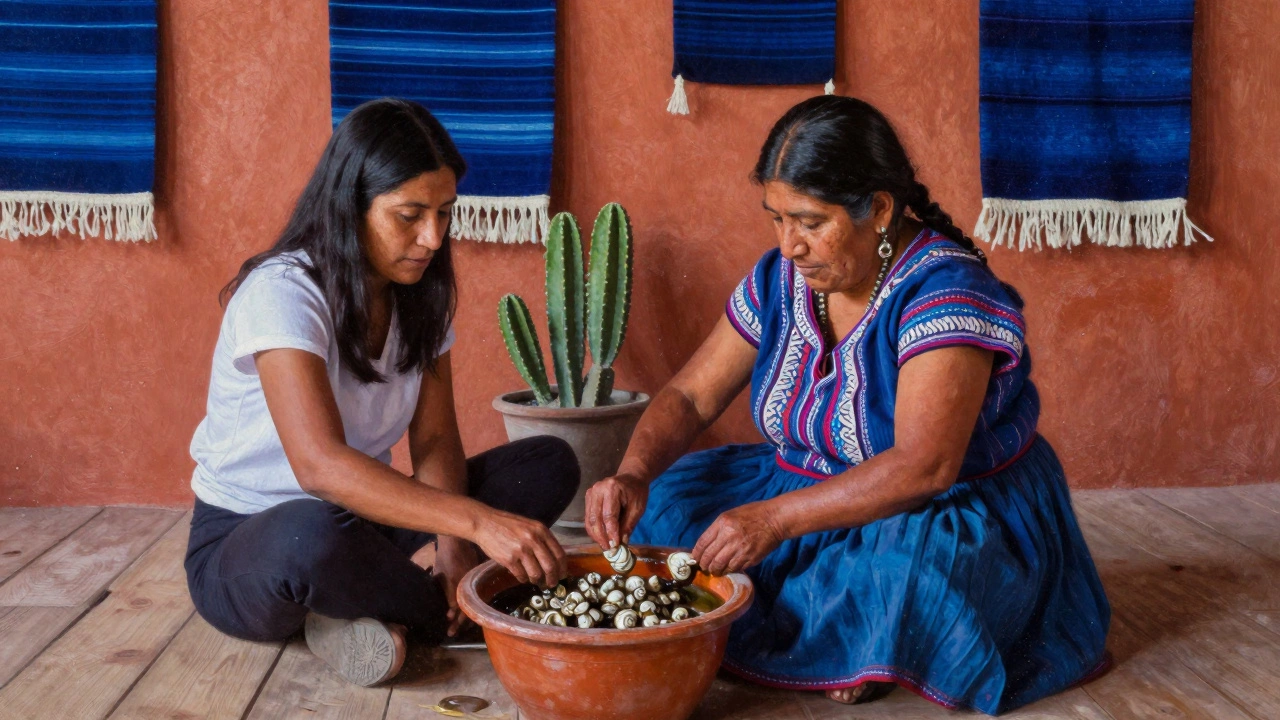
- The back room of a family-run textile shop in Oaxaca, where the owner shows them how natural dyes are made from snails and cactus.
- A village in Georgia where a grandmother invites them to help roll khachapuri bread, then teaches them a folk song.
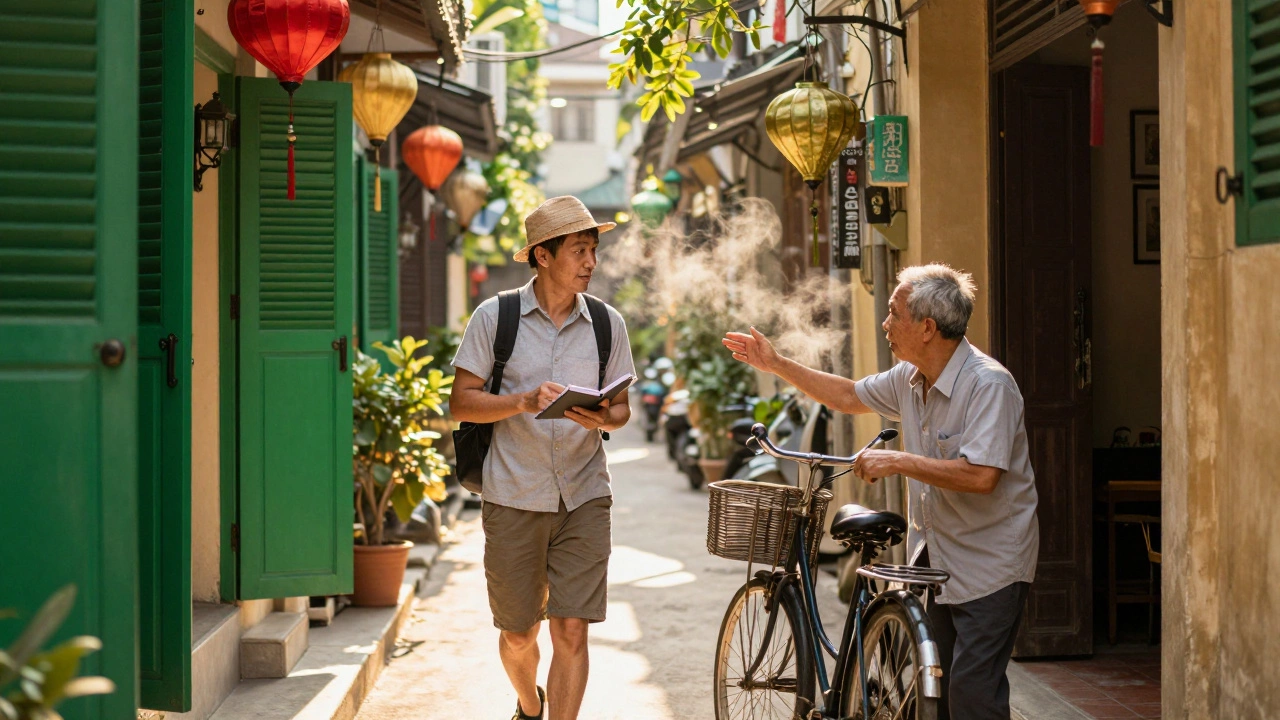
- A quiet alley in Hanoi where a retired teacher offers free Vietnamese poetry lessons in exchange for help fixing his bicycle.
These aren’t tourist attractions. They’re human connections. And they happen because the traveler isn’t trying to collect experiences-they’re trying to understand them.
Places like these rarely appear in guidebooks. They’re passed along by word of mouth, or stumbled upon by accident. A broken phone. A wrong turn. A language barrier that forces you to communicate without words. These are the tools of the serendipitous tourist.
What They Carry (And Don’t Carry)
They don’t bring a 10-page itinerary. They don’t carry a camera on a tripod. They don’t have a list of must-see sites. What they do carry:
- A notebook-not for listing places, but for jotting down overheard phrases, smells, or names.
- A phrasebook with only 15 essential phrases, not 200.
- A willingness to say ‘I don’t understand’ and then smile.
- Comfortable shoes. Always.
- A small gift-like local candy or a postcard from home-to offer when someone shows them kindness.
They leave their headphones at home. They don’t need to listen to a podcast about the history of Angkor Wat while standing in front of it. They want to hear the wind, the children laughing, the monk chanting.
Why This Matters More Than Ever
In 2025, tourism in Kyoto reached 10.2 million visitors. The city banned selfie sticks in 12 temples. The Guggenheim in Bilbao now limits entry to timed slots. Mass tourism is squeezing out authenticity. But serendipitous cultural tourists don’t contribute to that problem. They don’t crowd the same spots. They don’t drive up prices by competing for the same limited experiences.
Instead, they support local economies in quiet, meaningful ways. A family in rural Sicily who makes olive oil by hand doesn’t get tourists. But they get the serendipitous one-someone who shows up because they followed the scent of crushed olives down a dirt road. That person buys a jar, pays more than market price, and writes about it in a blog no one reads. But the family keeps making oil. Because someone cared enough to show up, unannounced.
This is cultural preservation in action. Not through museums or monuments-but through human exchange.
How to Become One
You don’t need to quit your job or travel for a year. You just need to change how you travel.
- Leave one day completely open in every trip. No plans. No research.
- Ask locals: ‘Where do you go when you’re not working?’ Not ‘What should I see?’
- Walk without a destination. Turn left at every third intersection.
- Carry a small notebook. Write down one thing you didn’t expect to learn.
- Let language barriers stay. Don’t rush to Google Translate. Use gestures. Smiles. Silence.
- Pay more for something handmade. Don’t ask for a receipt.
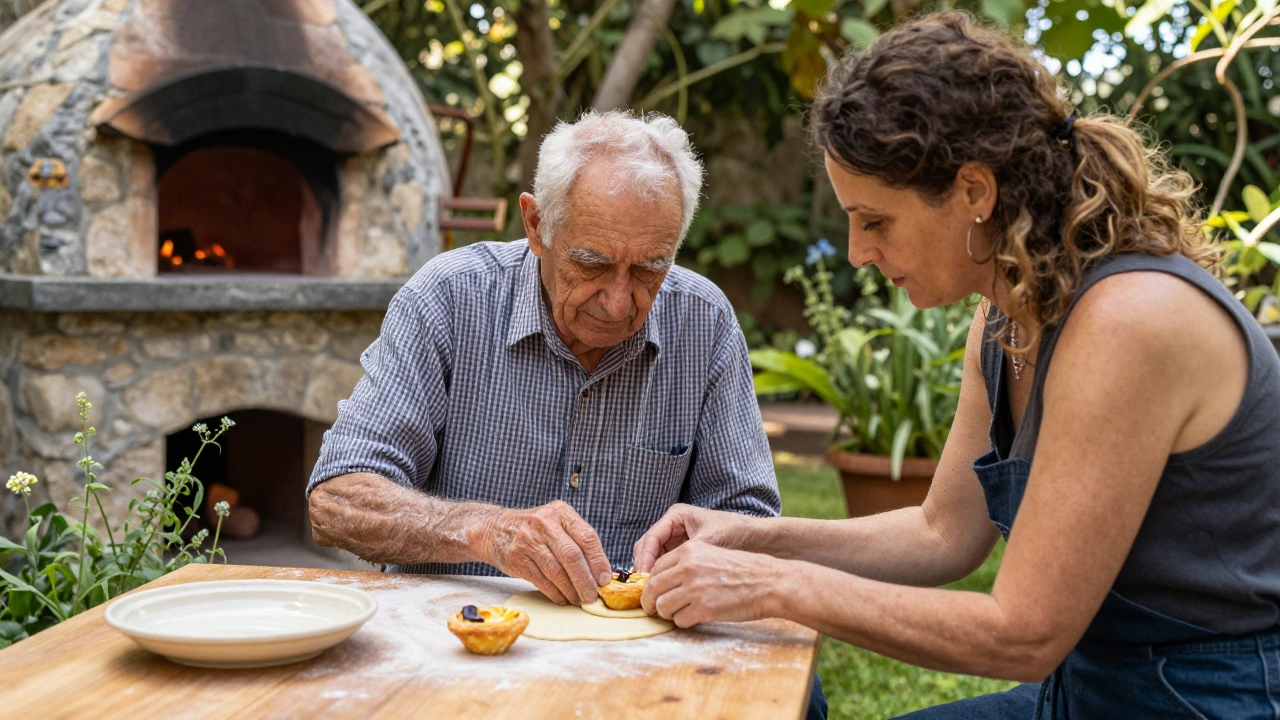
One woman from Toronto did this on a solo trip to Portugal. She got lost in Sintra and ended up helping an elderly man clean his garden. He taught her how to make pastéis de nata from scratch. She came home with a recipe, a new friend, and a deeper understanding of Portuguese hospitality. She didn’t visit the Pena Palace. But she didn’t need to.
The Real Reward
The serendipitous cultural tourist doesn’t come back with a hundred photos. They come back with a single moment that still lives inside them. The smell of wet clay in a pottery studio in Bulgaria. The sound of a lullaby sung in a dialect they’ll never learn. The taste of bread baked in a wood oven by someone who refused to take money.
These moments don’t fit on Instagram. They don’t have hashtags. But they change you. And that’s the point.
Can you be a serendipitous cultural tourist on a guided tour?
Yes-but only if you break away. Most guided tours move too fast for serendipity. But if you stay behind during free time, ask the guide where they go on their days off, or slip away for an hour to explore on your own, you can still find those moments. The tour just needs to be your starting point, not your cage.
Is serendipitous travel risky?
It can be, but not in the way people think. You won’t get robbed by wandering into a quiet alley. Most cultures are deeply welcoming to travelers who show respect, not entitlement. The real risk is emotional: you might feel uncomfortable when you don’t know what’s happening. That’s okay. Growth happens outside comfort zones. Always trust your gut, but don’t let fear stop you from asking questions.
Do you need to travel far to be a serendipitous cultural tourist?
No. A serendipitous cultural tourist can be found in any town. Visit a neighborhood you’ve never explored. Talk to the owner of a family-owned bakery. Ask how they learned to make their specialty. You might discover a tradition passed down for three generations. Culture isn’t just in foreign countries-it’s in the quiet corners of your own city.
Does this mean I shouldn’t visit famous landmarks?
Not at all. Famous landmarks are part of culture too. But don’t let them be the whole story. Visit the Colosseum, then wander into the nearby neighborhood and find the tiny café where locals eat lunch. The landmark tells you what happened. The café tells you how people live now.
Can kids be serendipitous cultural tourists?
Absolutely. Children are naturally curious and less afraid of the unknown. Let them lead the way in a new city. Let them pick the snack from the market. Let them follow the sound of music. These moments become lifelong memories-and they’re often more meaningful than any museum exhibit.