
You’ve got a free weekend. Your boss just said yes to a three-day break. Or maybe you just woke up and thought, “I need to get out of here.” You open your favorite flight app, type in your destination, and-boom-prices are insane. $800 for a round-trip to Vancouver? That’s not right. You remember hearing somewhere that flight prices drop on a specific day. But which day? And is it even true?
The short answer: flight prices don’t drop on one magic day. But they do follow patterns. And if you know how airlines think, you can save serious cash-even when booking at the last minute.
Why Flight Prices Change (And Why It’s Not Random)
Airlines don’t just pick prices out of thin air. They use complex algorithms that track demand, seat availability, competitor pricing, and even weather forecasts. But here’s the key thing most travelers miss: prices shift based on when people are searching, not when the flight leaves.
Think about it. Most people plan trips on weekends. Sunday night, after dinner, is when families start looking at flights for next week. Monday morning, office workers check for midweek trips. That’s when demand spikes. And when demand spikes, airlines raise prices.
So if you want the lowest fares, you need to book when fewer people are looking. That means avoiding peak search times. Not just the day of the week-but the time of day, too.
The Real Best Day to Book: Tuesday
Here’s what the data shows: Tuesday is the most reliable day to find lower flight prices. Not because airlines magically reset prices on Tuesday, but because that’s when they’re most likely to match competitor deals.
Airlines often launch sales on Monday night. By Tuesday morning, competitors have had time to respond. That’s when you’ll see the best matches. And since most people are still at work on Tuesday, search traffic is low. Fewer searches = less pressure to jack up prices.
Studies from Hopper, Google Flights, and the U.S. Department of Transportation show Tuesday afternoon (between 3 and 5 p.m. local time) consistently has the lowest average fares. In 2025, travelers who booked on Tuesday saved an average of 12% compared to Sunday bookings.
But here’s the catch: this only works if you’re flexible. If you need to fly out on Friday night, Tuesday might not help. The day you depart matters more than the day you book. So if you’re locked into a specific date, Tuesday won’t magically make your Friday flight cheaper.
What About Last-Minute Deals? Can You Actually Save?
You’ve heard the stories: “I booked a flight to Cancún 48 hours before departure and got it for $99!” Those stories are real-but they’re rare. And they’re not about the day of the week. They’re about empty seats.
Airlines hate empty seats. A plane that flies half-empty loses money. So 72 to 48 hours before departure, if a flight still has unsold seats, the system starts dropping prices. It’s not a sale. It’s a survival tactic.
That’s why last-minute deals often appear on Wednesday and Thursday. Why? Because most people book weekend trips on Friday or Saturday. If a flight to Miami is still half-empty by Wednesday, the airline will slash prices to fill those seats.
But here’s the trade-off: last-minute deals are risky. You might get lucky. Or you might end up paying more because you’re forced into a higher fare class. And if you need to book a hotel, car, or rental, you’re often stuck with premium prices there, too.
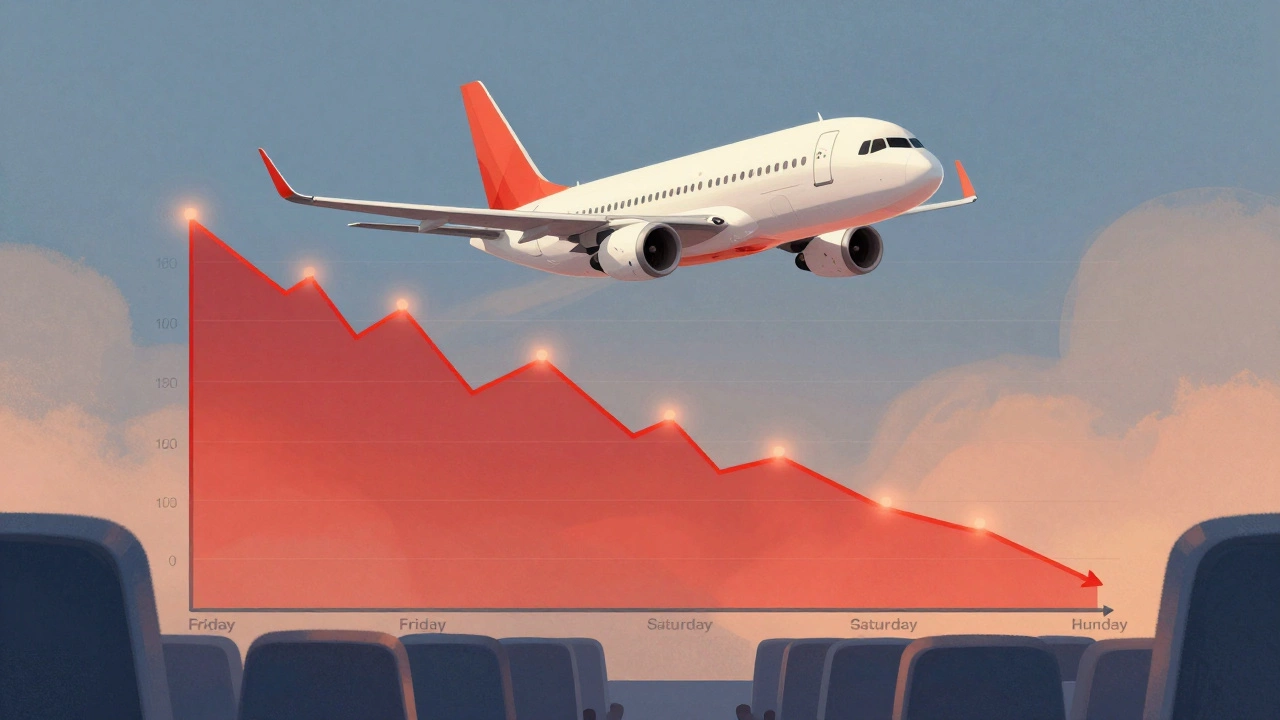
When NOT to Book: The Worst Days for Prices
Some days are traps. Avoid booking on:
- Friday - People are planning weekend trips. Demand is high. Prices rise fast.
- Saturday - Families book vacations. Airlines know you’re ready to pay.
- Sunday - The most expensive day to book. Everyone’s checking flights for next week. Prices peak.
If you’re booking on one of these days, you’re not getting a deal-you’re paying a premium for convenience. And if you’re booking last-minute on a Friday night? You’re basically handing over cash to the airline.
How to Spot Real Deals (Even If You’re Last-Minute)
Don’t just rely on the day. Use these tactics:
- Use incognito mode - Airlines track your searches. If you’ve looked at Toronto to Los Angeles three times, they’ll assume you’re desperate and raise prices. Open a private window to reset.
- Check multiple airports - Flying out of Billy Bishop instead of Pearson? You could save $150. Try nearby cities. A 30-minute drive can mean $200 less.
- Set price alerts - Google Flights and Hopper let you track routes. When prices drop, you get a notification. No need to check daily.
- Book midweek flights - Tuesday, Wednesday, Thursday departures are almost always cheaper than Friday-Sunday. Even if you book on Friday, choose a Wednesday return.
One traveler in Toronto booked a last-minute trip to Orlando on a Thursday. She used Hopper’s alert, found a $329 fare (down from $612), and left on a Tuesday. She saved $283. That’s not luck. That’s strategy.

The Myth of “Midnight Sales”
You’ve probably heard: “Book at midnight on Tuesday and you’ll get the lowest price.” That’s nonsense. Airlines don’t reset prices at midnight. They adjust in real time.
What happens at midnight? Fewer people are searching. So prices might dip slightly because of low traffic. But it’s not a sale. It’s just quiet. If you’re waiting for midnight to click “buy,” you’re wasting time.
Instead, focus on when the airline is motivated to sell. That’s when seats are still empty and the flight is within 72 hours. That’s when you’ll find the real deals.
What About International Flights?
The same rules apply, but with more variables. International flights often have longer booking windows. But if you’re looking for last-minute deals on transatlantic routes, Wednesday and Thursday still give you the best shot.
European carriers like Ryanair and easyJet often drop prices 72 hours before departure. U.S. airlines like JetBlue and Southwest do the same. The key? Check flights with stopovers. A layover in Chicago or Detroit can slash the price by 40%.
One traveler booked a last-minute flight from Toronto to London on a Thursday. Instead of going direct, she chose a route with a 4-hour layover in Detroit. The price? $512. The direct flight? $987. She saved $475. And she didn’t even leave the airport.
Final Rule: Flexibility Beats Timing
There’s no perfect day. But there’s a perfect mindset: be flexible.
If you can shift your travel dates by even a day, you’ll save money. If you can leave on a Tuesday instead of a Friday, you’ll save even more. If you’re okay with a 6 a.m. flight instead of a 3 p.m. one? That’s another $50.
Last-minute travel isn’t about waiting for a miracle. It’s about knowing how airlines think. Book when demand is low. Fly when most people are still at work. And don’t fall for the myth that Tuesday at midnight is magic. It’s not.
Check prices on Tuesday afternoon. Keep an eye out on Wednesday and Thursday. Be ready to jump when you see a 30% drop. And if you’re lucky? You’ll be on a plane by Friday-with cash left over for drinks on the beach.
Do flight prices really drop on Tuesday?
Yes, but not because of a magic reset. Tuesday afternoon is when airlines match competitor deals after Monday sales launch. Fewer people are searching then, so prices stay lower. It’s the most consistent time to find good fares, especially for domestic flights.
Is it better to book last minute or in advance?
For most people, booking 1-3 months in advance saves the most money. But if you’re flexible, last-minute deals can be better-especially on Wednesday and Thursday when airlines are trying to fill empty seats. The trade-off? You might not get your preferred flight time or seat.
Why are flights more expensive on weekends?
Weekends are peak travel times. Families book vacations, business travelers return, and demand spikes. Airlines raise prices because they know people are willing to pay more. Booking on Friday, Saturday, or Sunday almost always means paying a premium.
Can I save money by booking late at night?
Not really. Airlines don’t reset prices at midnight. Lower prices at night are usually just because fewer people are searching. The real savings come from booking on Tuesday or waiting until Wednesday if you’re flexible. Don’t wait up for a deal.
Should I use flight alert apps?
Yes. Apps like Hopper, Google Flights, and Skyscanner track price trends and notify you when fares drop. They’re especially useful for last-minute travel because they show you when a flight is at its lowest price in the past 30 days. Set alerts for your route, and you’ll know when to act.