
All-Inclusive vs. DIY Cost Calculator
Calculate Your True Travel Cost
The article explains how all-inclusive packages often have hidden costs and don't provide real value. This calculator shows you exactly how your trip might cost when comparing all-inclusive options versus planning your own experience.
Your Trip Cost Comparison
Based on article examplesAll-Inclusive Resort
$0
Includes resort fees, meals, drinks, and basic activities
DIY Travel Plan
$0
Your own hotel, meals, and activities
Everyone talks about all-inclusive package tours like they’re the perfect vacation-food, drinks, activities, even tips included. No budget surprises, no planning, just show up and relax. But here’s the truth most travel blogs won’t tell you: those deals come with trade-offs you won’t notice until you’re stuck at a resort with no car, no cash, and no real sense of where you are.
You’re Trapped in a Bubble
All-inclusive resorts are designed to keep you inside. Fences, gates, shuttle buses that only go to the airport-these aren’t accidents. They’re business models. You pay for everything upfront, so the resort makes sure you never leave. That means no exploring local markets, no eating at family-run restaurants, no wandering down a quiet beach that isn’t part of the resort’s private stretch. You’re not on vacation-you’re in a controlled environment.
One traveler in Cancún told me she spent five days at her all-inclusive resort and didn’t see a single local. Not one. Not even a vendor. She saw the same staff, the same cocktail waiters, the same pool attendants. By day three, she felt like she was in a movie set, not a country. That’s not culture. That’s isolation.
Food Gets Boring Fast
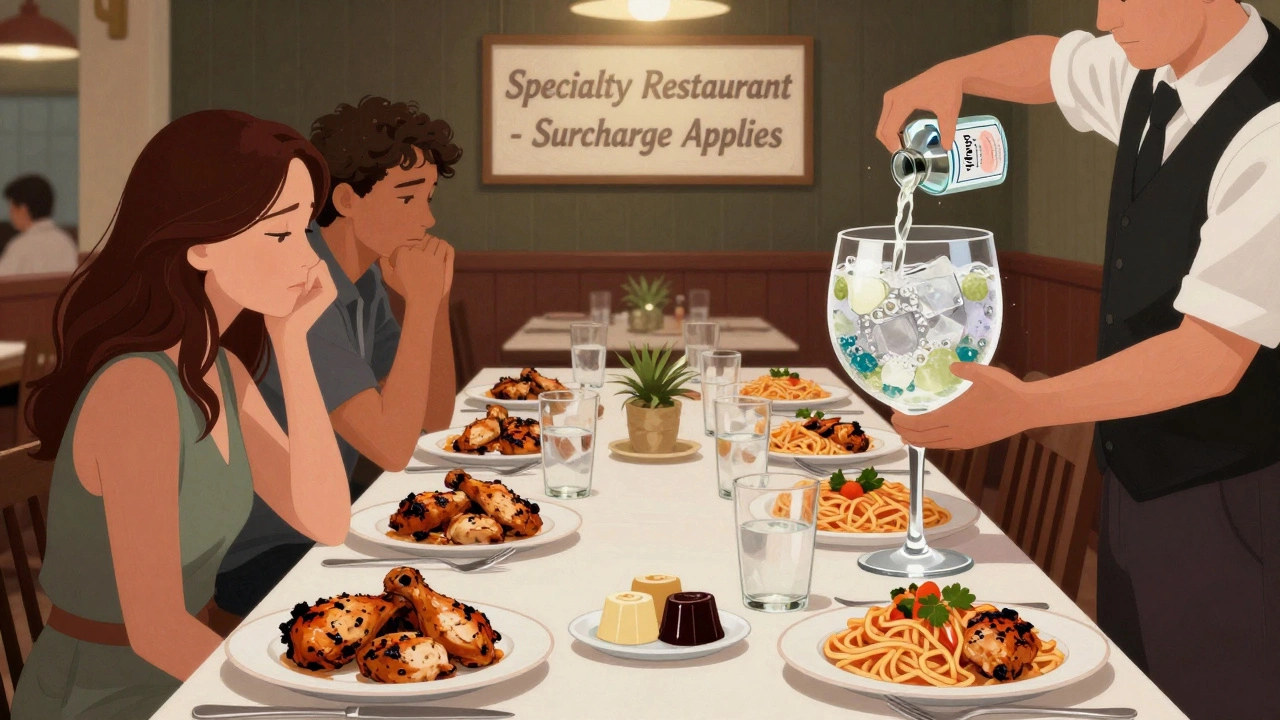
Think all-inclusive means endless buffets with fresh seafood, gourmet dishes, and global cuisine? Think again. Most resorts serve the same five dishes on repeat. Grilled chicken, pasta with tomato sauce, fried plantains, rice and beans, and a rubbery dessert that looks like cake but tastes like cardboard. Rotation? Maybe once every three days.
And don’t expect variety beyond the main buffet. Specialty restaurants often cost extra-even if you paid for "all-inclusive." You’ll see signs like "Reservations Required, Limited Seating, Surcharge Applies" right next to the buffet line. It’s a bait-and-switch dressed up as luxury.
One couple in Jamaica told me they ate the same shrimp scampi for four nights straight. They tried to order something different at the Italian restaurant and were told, "That’s not part of your plan." When they asked why, the manager smiled and said, "You’re paying for the buffet. That’s where the savings are."
Drinks Are Watered Down
You signed up for unlimited cocktails, right? But the drinks you get are rarely what you’d order on your own. Rum? It’s the cheapest house brand, diluted with soda and ice. Wine? Two-star supermarket stuff, served in oversized glasses to make it look like more. Even the beer is often local and low-quality.
At one resort in the Dominican Republic, a guest asked for a gin and tonic. The bartender handed her a glass with two ice cubes, a splash of tonic, and a teaspoon of gin. When she complained, she was told, "That’s the standard pour. You’re on an all-inclusive plan."
It’s not just about taste-it’s about quantity. You pay for unlimited drinks, but you get limited quality. And if you want something better, you pay extra. That’s not inclusive. That’s exploitation.
Activities Are a Show, Not an Experience
"Free snorkeling!" "Daily dance lessons!" "Beach volleyball tournaments!" Sounds fun, right? But these aren’t authentic experiences-they’re scheduled performances designed to fill your time so you don’t realize how little you’re actually doing.
Snorkeling? You’re dropped off at the same coral patch every day, where the fish have learned to swim away from humans. Dance lessons? A five-minute demo by a staff member who’s been doing the same routine for ten years. Beach volleyball? Three people playing while twenty others watch from lounge chairs.
Real adventure? You won’t find it here. Real culture? Not unless you sneak off the property. And if you do, you risk being charged for "leaving the resort"-yes, some places actually penalize guests who leave.
Hidden Costs Are Everywhere
"All-inclusive" doesn’t mean everything. It means everything inside the resort. Outside? You’re on your own-and the resort will make sure you know it.
Wi-Fi? Usually slow and capped. Need to call home? Pay per minute. Tip your staff? Not required, but expected-so you end up carrying cash anyway. Airport transfers? Often extra. Spa treatments? Always extra. Even bottled water sometimes costs extra if you want a brand other than the resort’s own.
One family in Mexico paid $2,800 for a week-long all-inclusive package. When they left, they spent another $450 on tips, a taxi to the town center, a few souvenirs, and a real meal at a local restaurant. That’s 16% more than they budgeted. And that’s before they bought sunscreen.
You Lose Control Over Your Time
On a regular vacation, you wake up when you want. You eat when you’re hungry. You nap when you’re tired. On an all-inclusive resort? Everything runs on a schedule.
Breakfast is 7-10 a.m. Lunch is 12-3 p.m. Dinner is 6-9 p.m. Snacks? Only available in the snack bar between 3-5 p.m. Want to eat at 11 p.m.? Too bad. The kitchen’s closed. Want to sit by the pool at 8 a.m.? The chairs are being cleaned. Want to leave early? The shuttle doesn’t come until 10 a.m.
It’s not relaxing. It’s regimented. You trade freedom for convenience-and most people don’t realize how much they miss the freedom until it’s gone.

There’s No Real Value in the Long Run
All-inclusive packages look cheap on paper. But when you compare them to booking flights, hotels, and meals separately, the math doesn’t always add up. You’re paying a premium for the illusion of simplicity.
Take a week in Tulum. Book a boutique hotel for $120 a night ($840 total). Add $30 a day for meals ($210). Add $150 for flights and transfers. Total: $1,200.
Now compare that to an all-inclusive resort: $1,400 for the same week. You get the same bed, same pool, same sun. But you lose access to local culture, real food, and the ability to choose your own pace.
And here’s the kicker: you’re not saving money. You’re paying for convenience. And convenience is expensive.
You’re Not Really on Vacation
Real vacations reset you. They change your rhythm, your perspective, your sense of place. All-inclusive resorts don’t do that. They replicate the same comforts you have at home-same food, same service, same noise, same people.
You come back tired. Not because you worked hard, but because you didn’t experience anything new. You didn’t get lost in a market. You didn’t try a dish you’d never heard of. You didn’t talk to someone who lived there.
All-inclusive vacations don’t expand your world. They shrink it.
What’s the Alternative?
You don’t need an all-inclusive package to have a great trip. Book a mid-range hotel in a town center. Eat where the locals eat. Walk around. Talk to people. Use public transport. You’ll spend less, see more, and remember more.
There’s no shame in wanting comfort. But comfort shouldn’t mean isolation. A real vacation isn’t about having everything handed to you. It’s about discovering what you didn’t know you were missing.
Are all-inclusive resorts worth it for families?
For families with young kids who need structure and safety, yes-sometimes. Resorts offer kid clubs, supervised activities, and meals that appeal to picky eaters. But even then, you’re paying extra for convenience. Many families end up spending more on taxis to local restaurants or buying snacks outside the resort. Consider a vacation rental with a kitchen instead. You save money, eat better, and still have space for the kids to run around.
Can you leave an all-inclusive resort anytime?
Yes, you can leave. But many resorts make it inconvenient. Some don’t offer shuttles after 6 p.m. Others charge for airport transfers if you leave early. Some even discourage guests from leaving by implying they’ll lose access to services. The resort doesn’t ban you-it just makes it harder to leave, so you stay and spend more.
Is the food really bad in all-inclusive resorts?
Not always-but it’s rarely great. Most resorts prioritize volume over quality. Ingredients are bought in bulk, stored for days, and cooked in large batches. Freshness suffers. You’ll find decent food at a few resorts, especially in places like Costa Rica or Italy, where local sourcing is part of the brand. But in the Caribbean or Mexico, it’s mostly predictable and repetitive. Don’t expect culinary surprises.
Do all-inclusive resorts have hidden fees?
Yes. Common ones include Wi-Fi access, premium drinks (like top-shelf liquor), spa services, airport transfers, tips for staff, and even bottled water in some cases. Some resorts charge extra for using the gym, taking part in water sports, or even using sunscreen from their gift shop. Always read the fine print. "All-inclusive" means everything inside the resort gates-not everything you might expect.
Are all-inclusive resorts safe?
Inside the resort? Usually yes. Resorts have security, staff, and emergency protocols. But safety doesn’t mean authenticity. Many resorts are located in areas with higher crime rates outside the gates. If you leave the resort, you’re on your own. Theft, scams, and overcharging are common in nearby towns. Stick to the resort if you’re uncomfortable, but know you’re trading safety for isolation.