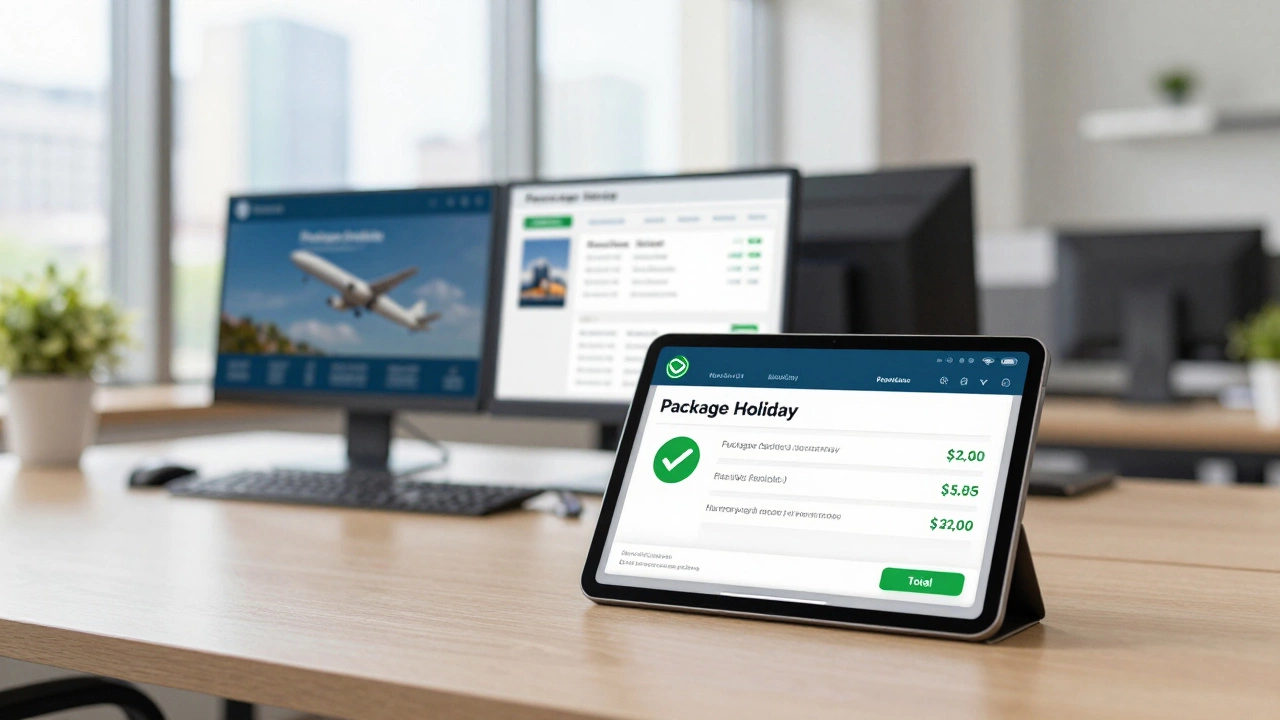
Package vs. DIY Holiday Cost Calculator
Enter Your Trip Details
DIY Booking Components
Comparison Result
Enter your estimates above to see which option offers better value.
There is a persistent myth in the travel world that bundling your flight and hotel into a single package holiday is always the most expensive option. Many travelers believe that by booking components separately, they can outsmart the system and save money. But if you look at the actual math behind airline pricing and hotel inventory management, the opposite is often true. The question isn't just about the sticker price; it is about risk, hidden fees, and what happens when things go wrong.
As someone who has tracked travel trends from Toronto to the Mediterranean for years, I have seen how the economics of travel have shifted. In 2026, with dynamic pricing algorithms controlling almost every seat and room, the 'DIY' approach requires more work than ever before. Let’s break down whether a package deal actually saves you cash or if it is just a convenient trap.
The Economics of Bundling: Why Packages Can Be Cheaper
To understand why a package might cost less, you need to understand how airlines and hotels sell their inventory. Airlines use complex revenue management systems that adjust prices based on demand, time to departure, and competitor activity. Hotels do the same. When you book a flight and a hotel separately, you are paying the full retail price for each component, often including peak-demand surcharges.
Package tour operators buy blocks of seats on planes and rooms in hotels in advance. They negotiate bulk rates that individual consumers cannot access. For example, an operator might secure 500 seats on a flight to Canary Islands at a fixed rate. If they don’t sell all 500 seats as part of a package, those seats might be sold individually at a higher price later, or they might go empty. To ensure they fill the plane, they often offer the bundled product at a lower margin than the sum of its parts would suggest if bought separately.
This is known as economies of scale. The operator absorbs some of the volatility in pricing because they have locked in costs early. You benefit from this stability. In many cases, especially for popular destinations like Turkey, Spain, or Mexico, the package price is genuinely lower than the combined cost of a direct flight plus a standalone hotel booking.
The Hidden Costs of DIY Travel
When you decide to book everything yourself, you think you are saving money. But there are hidden costs that rarely show up in the initial search results. These are the friction points that erode your potential savings.
- Transfer Fees: A package often includes airport transfers. If you book separately, you are looking at taxi fares, private car hires, or public transport tickets. In places like Bali or Greece, where resorts are far from airports, these transfers can cost $50-$100 per person each way.
- Currency Conversion and Payment Fees: Booking separate components often means paying different providers in different currencies. Your credit card may charge foreign transaction fees on multiple occasions. A package is usually paid once, in your home currency, locking in the exchange rate.
- Time Value: Researching flights, comparing hotel reviews, checking cancellation policies, and coordinating dates takes hours. If you value your time, the 'savings' from DIY booking might not justify the effort.
- Dynamic Pricing Spikes: If you book a flight today and a hotel next week, the price of the flight might jump due to increased demand. With a package, you lock in the total price upfront.
Consider a trip to Thailand. A DIY traveler might find a cheap flight but then pay premium rates for a last-minute hotel booking near the beach. A package operator has already secured the room block, offering a consistent rate that includes breakfast and sometimes even activities.
Protection and Peace of Mind: The ATOL Factor
Money saved is only good if you actually get to use it. This is where the concept of financial protection becomes critical. In the UK and many other markets, package holidays are protected by schemes like ATOL (Air Travel Organiser's Licence). This means if the company goes bust, you won’t be stranded abroad, and you will get a refund.
If you book a flight and hotel separately, you have no such safety net. If the airline collapses, you lose your ticket money and still have to pay for the hotel. If the hotel closes unexpectedly, you are left finding alternative accommodation at inflated last-minute rates. The package provider assumes this risk. You pay a small premium for this insurance, but it is often worth it for the peace of mind.
Think of it like buying a warranty on a new car. You hope you never need it, but if something breaks, you are covered. Without ATOL or similar protection, you are self-insuring. For a family of four, the potential loss from a failed airline could be thousands of dollars. Is saving $200 on the booking worth risking $4,000?

When DIY Actually Saves Money
It is not fair to say packages are always cheaper. There are specific scenarios where booking separately makes financial sense. Recognizing these situations is key to making the right choice.
- Complex Itineraries: If you are visiting three cities in ten days, a standard package won’t fit your needs. You will likely end up paying for unused nights or inconvenient transfer times. Customizing your own itinerary allows you to optimize for location and timing.
- Loyalty Points and Miles: Frequent flyers often accumulate points that can be redeemed for free flights or upgrades. By booking separately, you can apply these rewards. Package bookings rarely allow you to use frequent flyer miles for the flight portion, or if they do, the process is cumbersome.
- Budget Accommodation: If you prefer hostels, Airbnb, or boutique guesthouses that are not part of large hotel chains, packages won’t help. Tour operators typically partner with established resort brands. You can often find better deals on unique accommodations through direct booking platforms.
- Last-Minute Deals: Sometimes, airlines dump unsold seats at rock-bottom prices a few weeks before departure. If you are flexible, you can catch these 'error fares' or flash sales. Packages are usually priced further in advance and may not reflect these sudden drops.
For example, if you are a digital nomad working remotely from Portugal for a month, a package holiday is irrelevant. You need long-term rental agreements and reliable Wi-Fi, which are not standard package offerings.
| Feature | Package Holiday | DIY Booking |
|---|---|---|
| Price Transparency | All-inclusive upfront cost | Hidden fees may arise later |
| Financial Protection | Usually included (e.g., ATOL) | None unless purchased separately |
| Flexibility | Low (fixed dates/hotels) | High (change components easily) |
| Customer Support | Single point of contact | Multiple providers to manage |
| Best For | Relaxing beach vacations, families | City breaks, complex itineraries |
The Rise of Semi-Packages and Flexi-Booking
The travel industry is evolving. We are seeing the rise of 'semi-packages' or 'flexi-bookings.' These options allow you to bundle a flight and hotel but retain some flexibility. For instance, you might choose your own return date or select from a range of hotels within a star rating.
Platforms like Expedia or Booking.com now offer 'Bundle & Save' features. These aren’t traditional tour operator packages, but they mimic the economic benefits by negotiating corporate rates with hotels and airlines. They offer a middle ground: some price advantage without the rigid structure of a traditional package.
However, be careful. These online bundles often lack the same level of financial protection as regulated tour operators. Check the terms and conditions carefully. Do you have recourse if the airline cancels? Who handles the rebooking? Often, the answer is 'you do,' which defeats the purpose of bundling for convenience.

How to Decide: A Practical Checklist
Before you click 'book,' run through this quick checklist to determine which route is best for your specific trip.
- Destination: Is it a remote resort or a major city? Remote resorts often have limited transport options, making packages more valuable. Major cities like London or New York offer plenty of independent options.
- Travel Style: Do you want to relax and do nothing, or explore every corner? Relaxation favors packages; exploration favors DIY.
- Budget Sensitivity: Are you trying to minimize total spend? Compare the package price against the sum of current flight and hotel prices. Include estimated transfer costs in the DIY calculation.
- Risk Tolerance: Can you afford to lose your money if a provider fails? If not, stick to protected packages.
- Time Availability: Do you have hours to research? If not, a package saves time and mental energy.
In 2026, the smartest travelers don’t blindly choose one method over the other. They compare. Use package sites to gauge the baseline cost, then check independent booking engines. If the package is significantly cheaper and offers protection, take it. If the DIY option is only slightly more expensive but gives you the freedom you crave, go for it.
Final Thoughts on Value
Is it cheaper to book a trip as a package? Often, yes. But 'cheaper' doesn't always mean 'better value.' Value includes security, convenience, and suitability for your needs. For a straightforward beach holiday, a package is hard to beat. For a complex cultural journey, DIY is likely superior. Know what you are buying, read the fine print, and never sacrifice protection for a small discount.
Are package holidays always cheaper than booking separately?
Not always, but frequently. Package holidays leverage bulk buying power, often resulting in lower prices for popular destinations. However, for complex itineraries or niche accommodations, DIY booking can be cheaper. Always compare the total cost, including transfers and taxes, to make an accurate assessment.
What is ATOL protection and why does it matter?
ATOL (Air Travel Organiser's Licence) is a UK financial protection scheme. It ensures that if your travel company goes bankrupt, you will not be stranded abroad and will receive a refund. This protection is typically included in package holidays but not in separately booked flights and hotels, making packages safer financially.
Can I use frequent flyer miles when booking a package holiday?
It depends on the tour operator. Some allow you to add miles to reduce the cost of the flight portion, while others do not. Generally, DIY booking offers more flexibility in applying loyalty points and miles, which can significantly reduce costs for frequent travelers.
Are online bundle deals the same as traditional package holidays?
No. Online bundles from sites like Expedia offer price discounts by combining flights and hotels, but they often lack the comprehensive financial protection and customer support of traditional tour operators. Check the terms carefully to understand who is responsible if things go wrong.
When is it better to book a flight and hotel separately?
Booking separately is better when you have a complex itinerary involving multiple cities, prefer non-chain accommodations like Airbnbs, want to maximize loyalty points, or are traveling to a destination with abundant independent transport and lodging options, such as major European cities.