All-Inclusive Drink Cost Calculator
Your Trip Details
Estimated Total Out-of-Pocket Costs
Detailed Cost Breakdown
| Expense Item | Est. Cost |
|---|---|
| Premium Bar Drinks | $0 |
| Room Service Alcohol | $0 |
| Minibar Restocking (Daily) | $0 |
| Total Estimated Extras | $0 |
Enter your details and click calculate to see if upgrading to Premium is worth it.
You’ve booked the trip. You’ve packed your sunscreen. And now you’re staring at the fine print on your confirmation email, wondering if "unlimited" actually means "unlimited" or if there’s a secret cap hiding in the small text. Specifically, is there a hard rule that says all-inclusive resorts only give you six drinks a day?
The short answer is no. There is no universal industry standard that caps every guest at six beverages per 24-hour period. However, the reality is messier than a simple yes or no. While most major chains advertise truly unlimited consumption, many mid-range and budget properties have introduced "soft caps," time restrictions, or premium exclusions to manage costs and safety. Understanding these nuances before you land can save you from awkward moments at the bar and unexpected charges on your final bill.
Where Does the "Six Drinks" Myth Come From?
If you’ve heard about a six-drink limit, it likely stems from one of three places: specific boutique hotel policies, misinterpreted social media posts, or confusion with "premium" drink tiers. A few smaller, independent resorts in destinations like Mexico or the Caribbean have experimented with daily allowances to encourage responsible drinking and reduce waste. For example, some eco-resorts might include a set number of house wines or beers in your room service package, but charge extra for spirits or cocktails beyond that amount.
Additionally, during peak seasons or after incidents of excessive intoxication, individual hotels may temporarily impose discretionary limits. These are not written into the global contract of all-inclusive travel but are enforced by management on a case-by-case basis. It’s crucial to distinguish between a permanent policy and a temporary operational decision. Most large-scale operators like Sandals, Secrets, or Iberostar do not enforce a strict numerical cap on standard drinks.
What Actually Counts as "Unlimited"?
When a resort promises unlimited drinks, they are referring to their "house brands." This is the key distinction that trips up most travelers. House brands are the generic or locally produced liquors, beers, and wines that the hotel purchases in bulk. They are perfectly fine for getting the job done, but they won’t win any awards for complexity or taste.
- House Spirits: Usually basic tequila, rum, vodka, or gin. Think of brands you might see in a local supermarket rather than a high-end cocktail bar.
- House Beer: Typically local lagers or mass-market international brands (like Corona, Modelo, or Heineken) depending on the region.
- House Wine: Basic table wine served by the glass or pitcher. Bottle selections are often limited to entry-level options.
If you order a bottle of Grey Goose, a top-shelf scotch, or a vintage champagne, you will almost certainly be charged extra. This isn’t a "limit" on quantity; it’s a tiered pricing model. The "unlimited" promise applies only to the base tier. Always check the menu upon arrival. If a drink has a price tag next to it, it’s not part of your all-inclusive package.
Time Restrictions and "Happy Hours"
Another common misconception is that you can walk into the main bar at 8:00 AM with a hangover and demand a Bloody Mary. While food is usually available 24/7 in buffet settings, alcoholic beverage service often follows a schedule. Many resorts stop serving alcohol late at night (around midnight or 1:00 AM) and do not resume until mid-afternoon (around 3:00 PM). This creates a natural "cap" based on time rather than volume.
Some properties also implement "happy hour" styles where certain premium items are included only during specific windows. Outside those hours, you revert to house brands. This strategy helps bars manage inventory and staff workload during peak times. If you plan to sip slowly throughout the day, you’ll find this less restrictive. If you plan to party hard from sunset to sunrise, you might hit the wall when the bar closes.
Premium Packages and Upgrades
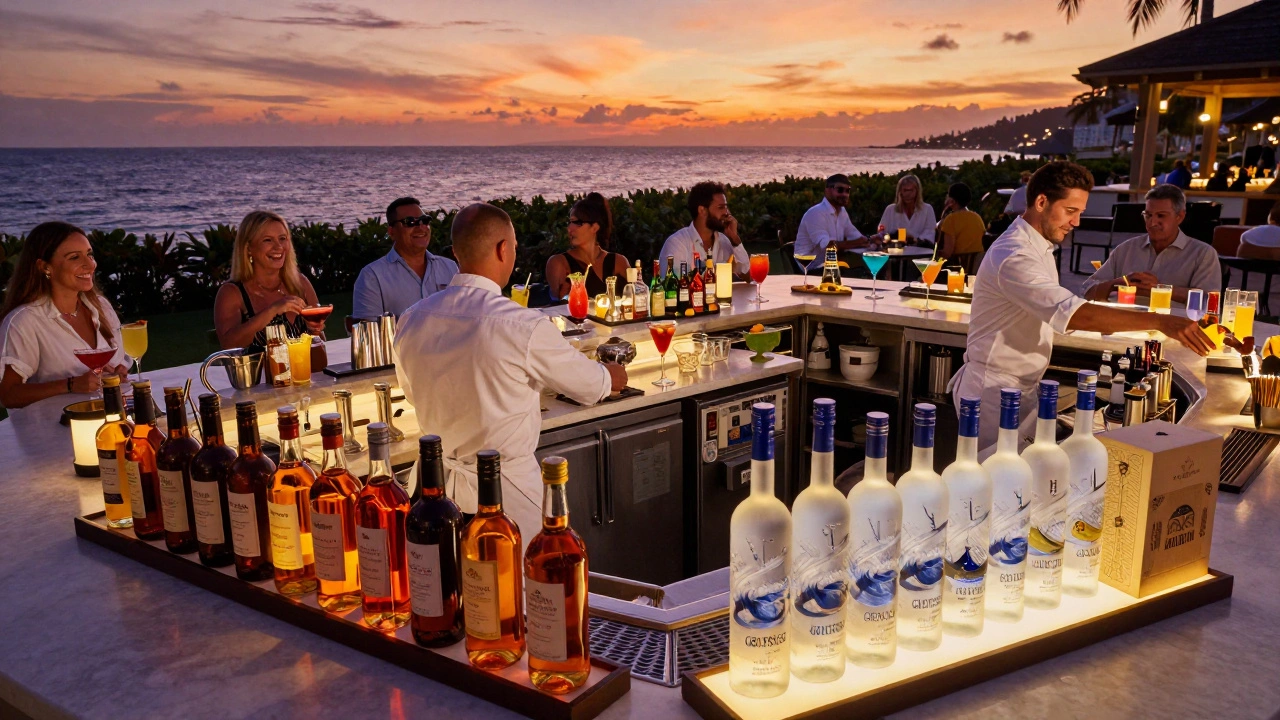
To avoid the frustration of house brands, many travelers opt for "Premium All-Inclusive" packages. These cost more upfront but unlock top-shelf spirits, name-brand wines, and sometimes even minibar restocking. Resorts like Hyatt Ziva, Dreams, and Hard Rock Hotels offer these tiers explicitly. By paying extra, you remove the ambiguity. You know exactly what’s included because the marketing materials list the brands.
Here is a quick comparison to help you decide if an upgrade is worth it:
| Feature | Standard All-Inclusive | Premium All-Inclusive |
|---|---|---|
| Spirits | House brands only (generic/local) | Name brands (Grey Goose, Patron, etc.) |
| Wine | Basic table wine by glass | Curated selection, bottles available |
| Minibar | Usually empty or non-refillable | Daily refill with premium snacks/drinks |
| Service Style | Self-service buffets & main bars | In-room dining, private cabana service |
| Drink Limit | None (but quality varies) | None (quality guaranteed) |
If you are a casual drinker who enjoys a beer with dinner and a cocktail at sunset, the standard package is sufficient. If you enjoy craft cocktails or specific brands, the premium upgrade eliminates the risk of disappointment and hidden costs.
Responsible Drinking Policies
While there is no numerical "six drink" rule, there is a universal "sober enough to stand" rule. Bartenders at all-inclusive resorts are trained to cut off guests who appear intoxicated. This is both a legal requirement in many jurisdictions and a liability issue for the hotel. If you become disruptive, aggressive, or unable to care for yourself, the staff will stop serving you. In severe cases, this can lead to eviction from the property without a refund.
This policy protects everyone. It ensures that families with children, couples seeking romance, and solo travelers looking for relaxation can enjoy the resort without being disturbed by overly intoxicated guests. Respect the bartenders’ judgment. If they say no more drinks, accept it gracefully. Water is always free, and staying hydrated is the best way to ensure you can enjoy your vacation for the entire duration.
Hidden Costs to Watch For
Even with an unlimited drink policy, watch out for these common extra charges:
- Room Service Alcohol: Some resorts exclude alcohol from 24-hour room service menus, charging full price for a midnight martini delivered to your door.
- Specialty Bars: Certain themed bars (like cigar lounges or sushi restaurants) may operate as separate entities within the resort, requiring additional payment for drinks.
- Tips: While tipping is often discouraged or prohibited in strict all-inclusive models, some guests still leave cash. This doesn’t affect your drink count but impacts your budget.
- Water Bottles: Tap water is rarely safe to drink in tropical destinations. While tap water dispensers are common, bottled water in rooms may incur a fee unless specified otherwise.
How to Verify Your Resort’s Policy
Before you book, take five minutes to dig deeper than the homepage. Look for the "Inclusions" page on the hotel’s official website. Read the FAQ section. If the information is vague, send an email to the reservations team. Ask directly: "Are there any limits on the number of alcoholic beverages per person per day? Are premium brands included?" Keep a screenshot of their response. This documentation can be useful if you encounter discrepancies upon arrival.
Also, check recent reviews on platforms like TripAdvisor or Booking.com. Search for keywords like "drink limit," "extra charge," or "bartender refused." Real guest experiences often reveal practices that aren’t advertised. If multiple recent reviews mention a sudden change in policy, consider choosing a different property.
Final Thoughts on Enjoying Your Vacation
The idea of a six-drink limit is largely a myth designed to create anxiety where none exists. Most reputable all-inclusive resorts want you to enjoy your stay, which includes enjoying their beverages. The real constraints are quality, timing, and responsibility. By understanding the difference between house and premium brands, respecting service hours, and drinking responsibly, you can maximize the value of your package without worrying about arbitrary caps. Focus on the experience-the sun, the sea, and the relaxation-rather than counting sips.
Do all-inclusive resorts really have a drink limit?
Most major all-inclusive resorts do not have a numerical drink limit. However, they serve "house brands" for free, while premium brands cost extra. Some smaller or budget properties may have soft caps or time restrictions, so it's always best to check the specific hotel's policy before booking.
Why did I hear about a 6-drink-a-day rule?
This rumor often comes from isolated incidents at specific boutique hotels, temporary measures taken during peak seasons, or misunderstandings about premium drink tiers. It is not an industry-wide standard for mainstream all-inclusive chains.
Can I get top-shelf liquor at an all-inclusive resort?
Yes, but usually for an additional fee. Standard packages include house brands. To access name-brand liquors like Grey Goose or Patrón Silver, you typically need to book a "Premium" or "Ultra" all-inclusive package, or pay out-of-pocket at the bar.
What happens if I get too drunk at an all-inclusive hotel?
Bartenders are trained to refuse service to intoxicated guests. If you become disruptive or unsafe, the hotel may intervene, and in extreme cases, you could be asked to leave the property without a refund. Responsible drinking ensures everyone enjoys their vacation.
Are drinks included in my room service?
It depends on the resort. Many all-inclusive hotels include food in 24-hour room service but exclude alcohol, charging full price for beverages delivered to your room. Check the specific inclusions list for your hotel to avoid surprise charges.